Welded steel pipes are essential in infrastructure and industrial projects. Choosing the right type is crucial for pipeline safety and performance.
Spiral welded pipes are formed into a spiral shape, making them highly efficient for large-diameter, long-distance water transmission and construction applications. In contrast, straight seam welded pipes are formed with a longitudinal seam, offering high dimensional accuracy and stable pressure resistance for strict industrial requirements.
Spiral Welded Pipe and Straight Seam Welded Pipe
Spiral welded pipe and straight seam welded pipe are two major types of welded steel pipes used in industrial and infrastructure projects. They differ in manufacturing methods, weld structure, performance characteristics, and applications. Understanding these differences helps engineers and buyers select the most suitable pipe for their projects.
The table below provides a clear comparison of the two pipe types.
Selection Guidelines:
Comparison of Technical Characteristics of Spiral Welded Pipe and Straight Seam Welded Pipe
Spiral welded pipe and straight seam welded pipe differ in technical characteristics due to their manufacturing processes and weld structures. Understanding these differences helps engineers select the right pipe type based on application requirements and project conditions.
|
Comparison Factor
|
Spiral Welded Pipe
|
Straight Seam Welded Pipe
|
|
Manufacturing Process
|
Continuously forms steel coils into a spiral shape. Offers high production flexibility and allows dimension adjustments by changing the forming angle.
|
Forms steel plates/coils into a cylinder with a longitudinal seam. Provides better control over pipe dimensions and stable geometry.
|
|
Welding Quality
|
Features a longer spiral weld seam. Modern submerged arc welding and advanced inspections ensure reliable performance and structural integrity.
|
Features a shorter longitudinal weld seam, simplifying quality control. Provides consistent mechanical properties and high dimensional accuracy.
|
|
Mechanical Performance
|
Highly suitable for large diameters with efficient material usage. Offers good resistance to external pressure and flexible production options.
|
Delivers high dimensional accuracy and stable pipe geometry. Ideal for applications requiring strict tolerances and reliable performance.
|
|
Dimensional Accuracy
|
Offers greater flexibility for producing large-diameter pipes economically using continuous production methods.
|
Provides superior dimensional control due to a more direct forming process, ensuring precise sizing and connection performance.
|
|
Cost & Application
|
Preferred for large-scale, long-distance pipeline projects due to efficient material utilization and cost-effectiveness.
|
Best suited for applications requiring precise dimensions, higher manufacturing control, or specific pressure requirements.
|
Application Areas of Spiral Welded Pipe and Straight Seam Welded Pipe
Spiral welded pipe and straight seam welded pipe serve different industrial applications based on their manufacturing characteristics. Spiral welded pipe excels in large-diameter, long-distance projects, while straight seam welded pipe is preferred for applications requiring high dimensional accuracy and consistent mechanical performance. Selecting the correct type improves safety, reduces maintenance, and ensures long-term reliability.
The table below summarizes the main application areas of each pipe type.
Selection Guidelines:
Recommended Welded Pipe Products & Global Shipping
We supply high-quality welded steel pipes for oil & gas, water transportation, construction, and industrial applications. Our range includes spiral welded pipe, straight seam welded pipe, LSAW, ERW, carbon steel, and low alloy steel pipes—available in various sizes, wall thicknesses, and steel grades.
Why Choose Us:
-
Compliance with API, ASTM, ASME, DIN, and EN standards
-
Advanced welding technology and strict quality control
-
Custom manufacturing capabilities
-
Competitive factory-direct pricing and technical support
Global Shipping:
We deliver worldwide via sea, air, rail, and multimodal transport. Heavy-duty export packaging ensures safe transit, and we support FOB, CIF, CFR, EXW, and DDP terms. Full export documentation and shipment tracking are provided for smooth logistics.
Whether for large-diameter infrastructure projects or precision industrial applications, our reliable welded pipes and efficient global shipping ensure safe, durable, and cost-effective solutions. Contact us today for product recommendations and competitive quotes.
How to Choose Between Spiral Welded Pipe and Straight Seam Welded Pipe
Choosing between spiral welded pipe and straight seam welded pipe depends on project requirements, diameter, pressure, environment, and budget. Both types offer reliable performance when manufactured to proper standards, but each suits different applications.
Maintenance and Inspection of Welded Steel Pipes
Proper maintenance and regular inspections are essential for extending the service life of welded steel pipes and ensuring pipeline safety. Routine checks should focus on weld seams, surface coatings, and connections, utilizing advanced methods like ultrasonic and radiographic testing to detect hidden defects.
Corrosion prevention is equally critical. Effective strategies include applying protective coatings, utilizing corrosion-resistant materials, and implementing cathodic protection for underground pipelines. Additionally, maintaining stable operating conditions by monitoring pressure and temperature prevents premature structural damage.
When inspections identify issues, timely repair of coatings or replacement of severely corroded sections is necessary. Establishing a comprehensive preventive maintenance program helps operators manage risks, reduce unexpected downtime, and maintain reliable performance. By combining regular inspections, proactive corrosion protection, and timely maintenance, businesses can significantly improve pipeline safety, operational efficiency, and long-term project reliability.
Conclusion
Spiral welded pipes and straight seam welded pipes serve different industrial needs. Spiral pipes offer flexibility for large-diameter, long-distance pipelines, while straight seam pipes provide superior dimensional accuracy and pressure resistance for precise applications.
Choosing the right pipe depends on project requirements like diameter, pressure, and budget. Additionally, regular inspection and preventive maintenance are essential to extend service life and ensure pipeline safety.
FAQ:
Q1: What is the difference between spiral welded pipe and straight seam welded pipe?
-
Explain differences in manufacturing process, weld direction, performance characteristics, and applications.
Q2: Which is stronger, spiral welded pipe or straight seam welded pipe?
-
Compare strength factors based on pipe design, welding quality, material grade, and application conditions.
Q3: Is spiral welded pipe suitable for oil and gas pipelines?
-
Explain its advantages for large-diameter pipeline transportation and project applications.
Q4: When should I choose straight seam welded pipe?
-
Discuss applications requiring higher dimensional accuracy and pressure performance.
Q5: How are welded steel pipes tested for quality?
-
Explain common inspection methods such as ultrasonic testing, hydrostatic testing, and weld inspection.
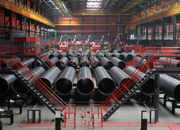 Threeway Steel is known as a professional supplier engaged in manufacturing and distributing a wide range of steel pipe, and our headquarter located the central part of China – Hunan and six associated factories throughout China.
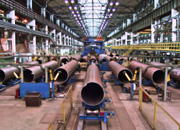 Threeway Steel is known as a professional supplier engaged in designing, manufacturing and distribution of a wide range of steel products with the headquarter located the central part of China – Hunan and six associated factories throughout China.
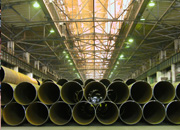 Threeway Steel is known as a professional supplier engaged in designing, manufacturing and distribution of a wide range of steel products with the headquarter located the central part of China – Hunan and six associated factories throughout China.
 Threeway Steel is known as a professional supplier engaged in designing, manufacturing and distribution of a wide range of steel products with the headquarter located the central part of China – Hunan and six associated factories throughout China.
 Threeway Steel is known as a professional supplier engaged in designing, manufacturing and distribution of a wide range of steel products with the headquarter located the central part of China – Hunan and six associated factories throughout China.