Seamless and welded steel pipes are both widely used in oil & gas, construction, power generation, and chemical processing—but they differ significantly in manufacturing, performance, and cost. Seamless pipes are typically more expensive, and this price gap reflects real production complexities rather than simple market factors.
Seamless pipes are made from solid billets through heating, piercing, rolling, and heat treatment—without any welded seam. This gives them a uniform structure, superior strength, and excellent pressure resistance, making them ideal for high-pressure boilers, oil & gas transport, and power plants.
Welded pipes, formed from plates or strips and joined by welding, offer greater production efficiency and lower costs. They are well-suited for construction, water transport, and structural applications where extreme pressure resistance is not required.
The higher cost of seamless pipes stems from premium raw materials, complex processes, and stricter quality control. In critical applications, this added investment pays off through greater reliability, fewer maintenance needs, and longer service life.
Main Reasons Why Seamless Steel Pipes Cost More Than Welded Steel Pipes
The price difference between seamless and welded steel pipes is primarily determined by manufacturing processes, material requirements, and performance standards. Although both are widely used in industrial applications, seamless pipes require advanced technology and stricter quality control, leading to higher manufacturing costs.
|
Cost Factor
|
Key Details and Impact
|
|
Complex Manufacturing
|
Produced from solid billets via heating, piercing, and rolling without a weld seam. This precise, multi-stage process requires advanced equipment and skilled operators, directly increasing production costs.
|
|
Higher Raw Material Needs
|
Requires high-quality steel billets with consistent chemical composition. Strict material control is necessary to prevent internal defects (e.g., inclusions, porosity) and ensure reliability under extreme conditions.
|
|
Superior Strength & Pressure
|
The absence of a weld seam provides better resistance to internal pressure and mechanical stress. This makes them ideal for critical, high-pressure applications like oil and gas pipelines and power plants.
|
|
Stricter Quality Inspection
|
Requires comprehensive testing (ultrasonic, hydrostatic, mechanical, and chemical analysis) to guarantee safety. These rigorous quality control measures add to production costs but ensure superior performance.
|
|
Demanding Application Needs
|
Welded pipes suit general, cost-efficient uses, while seamless pipes are chosen for safety-critical systems. The higher initial cost is justified by longer service life and reduced risk of failures in harsh environments.
|
Seamless Steel Pipes vs. Welded Steel Pipes: Which One Should You Choose?
Choosing between seamless and welded steel pipes depends on project-specific factors—operating pressure, temperature, environment, and budget. Both types offer distinct advantages, and the right selection should balance performance needs with cost considerations rather than focusing on price alone.
The table below provides a clear comparison to guide decision-making.
Selection Guidelines:
Key Takeaway:
Neither type is universally superior—seamless pipes offer unmatched strength and reliability for demanding environments, while welded pipes provide cost-effective solutions for general applications. Understanding these differences enables engineers and buyers to make informed decisions that balance performance, safety, and long-term value.
How to Choose High-Quality Seamless Steel Pipes
|
Selection Factor
|
Key Considerations and Requirements
|
|
Material Grade
|
Select the appropriate grade (carbon, alloy, or stainless steel) based on working pressure, operating temperature, and chemical exposure to ensure optimal strength and corrosion resistance.
|
|
Standards & Certifications
|
Ensure compliance with recognized international standards (ASTM, API, ASME, EN). Request quality certificates and inspection reports to verify traceability and product specifications.
|
|
Production & Quality Control
|
Choose manufacturers with advanced equipment and strict process control. Pipes must undergo rigorous testing, including chemical analysis, ultrasonic testing, and hydrostatic testing, to detect defects.
|
|
Dimensions & Surface Quality
|
Confirm accurate outer diameter, wall thickness, and tolerances. Inspect the surface to ensure it is smooth and free from cracks, corrosion, or deep scratches to guarantee durability.
|
|
Supplier Experience
|
Partner with reliable suppliers who offer technical support, customized solutions, and professional logistics. Strong production capabilities and industry experience ensure stable quality and timely delivery.
|
Our Seamless Steel Pipe Solutions & Worldwide Shipping
We are a professional supplier of seamless steel pipes, serving oil & gas, power generation, chemical processing, construction, and mechanical manufacturing industries with high-quality, reliable piping solutions.
Product Range
We offer carbon steel, alloy steel, and stainless steel seamless pipes—including high-pressure, boiler, and oil & gas grades—in various diameters, wall thicknesses, and lengths. Customized solutions are available for specific project requirements.
Quality Assurance
All pipes undergo strict inspections: chemical analysis, mechanical testing, dimensional checks, surface examination, and NDT where required. Our products deliver excellent pressure resistance and reliable performance in demanding environments.
Global Shipping
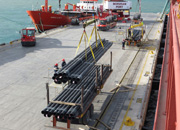
We manage the complete logistics process—from production scheduling and packaging to export documentation and transportation. Secure packaging prevents damage during transit, and we support sea, air, and express freight options for timely worldwide delivery.
Why Choose Us
-
Strict quality control and full traceability
-
Custom manufacturing for unique specifications
-
Experienced technical support
-
Reliable global shipping with on-time delivery
Contact us today to find the right seamless steel pipe solutions for your project and achieve long-term, dependable performance.
Conclusion
The price difference between seamless and welded steel pipes stems from manufacturing complexity, material requirements, and performance advantages. Seamless pipes—produced from solid billets through heating, piercing, and rolling—offer superior uniformity, high-pressure resistance, and excellent temperature performance, making them ideal for oil & gas, power plants, boilers, and chemical equipment. Welded pipes, formed from plates or strips, provide a cost-effective solution for construction, water transport, and general industrial applications with moderate pressure demands.
Selection should balance performance needs and lifecycle value, not just initial cost. Operating pressure, temperature, corrosion environment, and safety requirements are key considerations. In critical applications, the higher investment in seamless pipes pays off through greater reliability, fewer maintenance needs, and longer service life.
Quality depends on material selection, standards compliance, inspection procedures, and supplier expertise. Partnering with an experienced manufacturer ensures reliable products, technical support, and timely delivery.
FAQ:
Q1: Why are seamless steel pipes more expensive than welded steel pipes?
Seamless steel pipes cost more because they require a more complex manufacturing process, higher-quality raw materials, advanced production equipment, and stricter quality inspections. Their superior strength and pressure resistance also make them suitable for more demanding applications.
Q2: Are seamless steel pipes better than welded steel pipes?
Seamless steel pipes offer higher strength, better pressure resistance, and improved performance in extreme conditions. However, welded steel pipes can be a more economical choice for applications with lower pressure and less demanding requirements.
Q3: When should I choose seamless steel pipes instead of welded steel pipes?
Seamless steel pipes are recommended for high-pressure, high-temperature, and critical applications such as oil and gas systems, boilers, chemical equipment, and power plants where reliability is essential.
Q4: Can seamless steel pipes reduce long-term operating costs?
Although seamless steel pipes have a higher initial cost, their durability, reliability, and resistance to failure can reduce maintenance needs, downtime, and replacement costs over their service life.
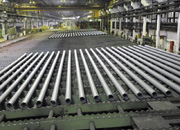
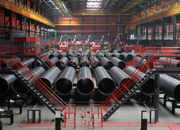 Threeway Steel is known as a professional supplier engaged in manufacturing and distributing a wide range of steel pipe, and our headquarter located the central part of China – Hunan and six associated factories throughout China.
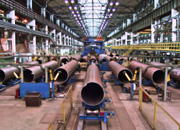 Threeway Steel is known as a professional supplier engaged in designing, manufacturing and distribution of a wide range of steel products with the headquarter located the central part of China – Hunan and six associated factories throughout China.
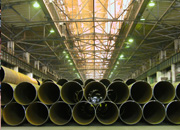 Threeway Steel is known as a professional supplier engaged in designing, manufacturing and distribution of a wide range of steel products with the headquarter located the central part of China – Hunan and six associated factories throughout China.
 Threeway Steel is known as a professional supplier engaged in designing, manufacturing and distribution of a wide range of steel products with the headquarter located the central part of China – Hunan and six associated factories throughout China.
 Threeway Steel is known as a professional supplier engaged in designing, manufacturing and distribution of a wide range of steel products with the headquarter located the central part of China – Hunan and six associated factories throughout China.