First, corrosion prevention for welded
galvanized steel pipes: After surface treatment, apply thermal spray zinc.
If on-site galvanizing is not possible, on-site corrosion prevention methods can be used: apply epoxy zinc-rich primer, epoxy micaceous iron oxide intermediate paint, and polyurethane topcoat. Thickness should refer to relevant standards.
Second, characteristics of galvanized steel pipe processes:
1. Optimization of sulfate zinc plating: Sulfate zinc plating has the advantage of up to 100% current efficiency and a fast deposition rate, which is unmatched by other zinc plating processes. However, due to insufficient crystallization, poor dispersion, and deep plating capabilities, it is only suitable for electroplating steel pipes and wires with simple geometric shapes. The sulfate electroplating zinc-iron alloy process optimizes the traditional sulfate zinc plating process, retaining only the main salt, zinc sulfate, and discarding all other components. An appropriate amount of iron salt is added to the new process formula, transforming the original single-metal coating into a zinc-iron alloy coating. The reorganized process not only retains the advantages of high current efficiency and fast deposition rate of the original process, but also greatly improves dispersion and deep plating capabilities. Complex parts that were previously unsuitable for plating can now be plated, regardless of whether they are simple or complex, and the protective performance is 3-5 times better than that of single metals. Production practice has proven that for continuous electroplating of wire and steel pipes, the coating grains are finer and brighter than before, with a faster deposition rate. The required coating thickness is achieved within 2-3 minutes.
2. Conversion of Sulfate Zinc Plating: In sulfate electroplating of zinc-iron alloys, only the main salt, zinc sulfate, is retained. Other components, such as aluminum sulfate and alum (potassium aluminum sulfate), can be removed by adding sodium hydroxide during plating solution treatment to form insoluble hydroxide precipitates. Organic additives are removed by adsorption with powdered activated carbon. Experiments show that aluminum sulfate and potassium aluminum sulfate are difficult to completely remove in one step, affecting the coating brightness, but not severely. They are consumed as they are carried out, and the coating brightness can be restored. The solution can be replenished according to the required component content after treatment, thus completing the conversion.
3. Fast deposition rate and excellent protective performance: The sulfate electroplating zinc-iron alloy process boasts a current efficiency of up to 100%, and its deposition rate is unparalleled by any other galvanizing process. The operating speed of the fine tube is 8-12 m/min, with an average coating thickness of 2 m/min, which is difficult to achieve with continuous galvanizing. The coating is bright, fine, and pleasing to the eye. Tested according to the national standard GB/T10125 "Artificial Atmosphere Test - Salt Spray Test," the coating remains intact and unchanged after 72 hours; after 96 hours, a small amount of white rust appears on the coating surface.
4. Unique clean production: The galvanized steel pipe uses the sulfate electroplating zinc-iron alloy process, where the production line tanks are perforated and directly connected, preventing any solution carryover or overflow. Each step of the production process consists of a circulation system. Each solution in the plating tank, including acid and alkali solutions, electroplating solutions, and brightening and passivation solutions, is recycled and reused without leakage or discharge to the outside of the system. The production line has only 5 cleaning tanks, employing a recycling and periodic discharge system. In particular, the passivation process does not involve cleaning, resulting in no wastewater generation.
5. Special Characteristics of Electroplating Equipment: Electroplating of galvanized steel pipes and copper wire is similar to continuous electroplating, but the equipment used differs. The plating tank for iron wire is designed to be long, wide, and shallow due to its slender shape. During electroplating, the iron wire passes through holes and spreads out in a straight line on the liquid surface, maintaining spacing between each other. However, galvanized steel pipes differ from iron wires, having unique characteristics, and the plating tank equipment is more complex. The tank consists of two parts: an upper plating tank and a lower solution circulation and storage tank, forming a trapezoidal shape that is narrower at the top and wider at the bottom. The plating tank contains channels for the electroplating of galvanized steel pipes. Two through-holes at the bottom of the tank connect to the lower storage tank and form a plating solution circulation and reuse system with a submersible pump. Therefore, like wire electroplating, the galvanized steel pipe is a dynamic process. However, unlike wire electroplating, the plating solution for electroplating galvanized steel pipes is also dynamic.
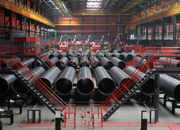 Threeway Steel is known as a professional supplier engaged in manufacturing and distributing a wide range of steel pipe, and our headquarter located the central part of China – Hunan and six associated factories throughout China.
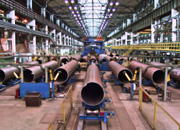 Threeway Steel is known as a professional supplier engaged in designing, manufacturing and distribution of a wide range of steel products with the headquarter located the central part of China – Hunan and six associated factories throughout China.
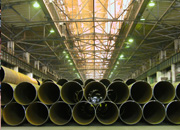 Threeway Steel is known as a professional supplier engaged in designing, manufacturing and distribution of a wide range of steel products with the headquarter located the central part of China – Hunan and six associated factories throughout China.
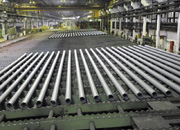 Threeway Steel is known as a professional supplier engaged in designing, manufacturing and distribution of a wide range of steel products with the headquarter located the central part of China – Hunan and six associated factories throughout China.
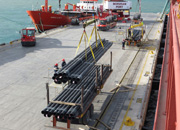 Threeway Steel is known as a professional supplier engaged in designing, manufacturing and distribution of a wide range of steel products with the headquarter located the central part of China – Hunan and six associated factories throughout China.