Stainless steel fluid pipes are used to transport fluid substances in industries such as food, pressure vessels, and industrial conveying. Pipes used for transporting fluids have very high process requirements, the most critical being these points:
First, the material requirements of the stainless steel fluid pipe: Because the transport of objects will exert a certain impact force on the stainless steel fluid pipe wall, there are certain requirements for its compressive strength; 304 stainless steel pipe has a compressive strength of over 515 MPa, exhibiting excellent compressive strength.
Second, the surface finish of the stainless steel fluid pipe: The inner and outer surfaces of the stainless steel fluid pipe are polished to achieve a bright surface, commonly known as a mirror finish. This is mainly to prevent fluid substances from adhering to the inner walls of the stainless steel fluid pipe, which can easily lead to contamination and blockage over time. The core technology of the polishing process for stainless steel fluid pipes is that the surface roughness of the stainless steel pipe can reach 0.008μm.
Third, the passivation layer of the stainless steel fluid pipe: After polishing, the stainless steel fluid pipe needs to be immersed in a passivation tank. An acidic passivation solution oxidizes the surface of the steel pipe to form a passivation layer, thus achieving corrosion resistance. Our quality control personnel monitor each process in real time to ensure that the stainless steel pipe fittings are thoroughly acid-washed and passivated without damaging the workpiece.
Fourth, the oil-free status of the stainless steel fluid pipe: After passivation, an oil-free cleaning process is performed to remove oil and other contaminants from the surface of the stainless steel fluid pipe. After completion, an oil analyzer is used for inspection. This is primarily to prevent oil contamination of the stainless steel fluid pipe wall from polluting the fluid inside the pipe.
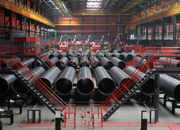 Threeway Steel is known as a professional supplier engaged in manufacturing and distributing a wide range of steel pipe, and our headquarter located the central part of China – Hunan and six associated factories throughout China.
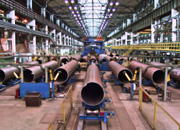 Threeway Steel is known as a professional supplier engaged in designing, manufacturing and distribution of a wide range of steel products with the headquarter located the central part of China – Hunan and six associated factories throughout China.
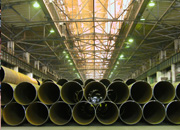 Threeway Steel is known as a professional supplier engaged in designing, manufacturing and distribution of a wide range of steel products with the headquarter located the central part of China – Hunan and six associated factories throughout China.
 Threeway Steel is known as a professional supplier engaged in designing, manufacturing and distribution of a wide range of steel products with the headquarter located the central part of China – Hunan and six associated factories throughout China.
 Threeway Steel is known as a professional supplier engaged in designing, manufacturing and distribution of a wide range of steel products with the headquarter located the central part of China – Hunan and six associated factories throughout China.