As a high-performance industrial material,
P22 cold-drawn alloy steel pipes are triggering a new round of technological upgrades in the manufacturing industry due to their unique processing characteristics and wide range of applications. This chromium-molybdenum alloy steel pipe, produced according to ASTM A335 standards, significantly improves the material's mechanical properties and dimensional accuracy through the cold-drawing process, becoming an irreplaceable key component in high-end equipment fields such as petrochemicals and power energy.
In terms of metallurgical processes, P22 cold-drawn alloy steel pipes exhibit three core advantages. First, cold deformation processing densifies the steel pipe's grain structure, achieving a tensile strength of over 515 MPa and a yield strength approximately 20% higher than that of hot-rolled steel pipes. Second, the precisely controlled cold-drawing process ensures that the steel pipe's outer diameter tolerance is controlled within ±0.1 mm, and the wall thickness uniformity reaches over 98%, making it particularly suitable for high-pressure steel pipeline systems. Test data from the Shanghai Materials Research Institute in 2025 shows that the fatigue life of cold-drawn P22 alloy steel pipes is 3-5 times longer than conventional products. More importantly, this process enables the one-time forming of complex cross-sectional shapes, significantly reducing subsequent machining. From a materials science perspective, the chemical composition of P22 alloy (2.25Cr-1Mo) has been specially optimized. The chromium content is controlled within the range of 2.0-2.5%, ensuring both oxidation resistance and preventing σ-phase embrittlement. The addition of molybdenum allows the material to maintain a creep strength of 280MPa even at 600℃. A domestic special steel company, through microalloying technology, added 0.08%V and 0.03%Nb to the traditional composition, extending the creep rupture time of P22 cold-drawn tubes to 12,000 hours, setting a new industry record. This improved material was successfully applied in the 580℃ high-temperature reactor of the Hainan Refining & Chemical Phase II project, and showed no deformation after 18 months of operation.
From an application perspective, P22 cold-drawn alloy tubes are demonstrating their technological value in multiple fields. In the construction of supercritical power plants, the superheater steel pipes manufactured there can withstand extreme operating conditions of 31MPa/620℃. In petroleum cracking units, the use of cold-drawn reducing steel pipes decreases the number of welds by 60%, significantly reducing the risk of stress corrosion. The Zhoushan Green Petrochemical Base, scheduled to go into operation in 2025, uses P22 cold-drawn steel pipes for 90% of its process piping system, saving over 30 million yuan in maintenance costs annually. More advanced applications are emerging in the field of hydrogen energy storage and transportation. P22 cold-drawn alloy steel pipes with special surface treatment have passed a 70MPa hydrogen embrittlement test and are expected to become the standard material for next-generation hydrogen steel pipelines.
A quality control system is the fundamental guarantee of the reliability of P22 cold-drawn alloy steel pipes. Leading manufacturers implement full-process digital traceability, from controlling the equiaxed crystal ratio of continuously cast round billets to optimizing deformation heat treatment parameters during the cold drawing process, with 22 key quality monitoring points at each stage. The latest phased array ultrasonic testing technology can identify surface cracks as deep as 0.05mm, and the eddy current flaw detection system has a detection sensitivity of 0.03mm for wall thickness changes. Statistics from a benchmark factory in Jiangsu Province show that this system has increased the first-pass yield from 92% to 99.6%, and reduced the scrap rate to 1/200th of the international advanced level.
Faced with the global energy transition trend, P22 cold-drawn alloy steel pipes are ushering in a period of technological breakthroughs. The gradient annealing process developed by a domestic R&D team enables the steel pipes to achieve an impact energy of 54J at -46℃, fully meeting the needs of Arctic oil and gas fields. In terms of sustainable development, recycled P22 alloy steel pipes smelted using a short-process electric arc furnace have passed API 6A certification, reducing carbon emissions by 42% compared to traditional processes.
From early simple imitation to setting international standards, the technological breakthrough of P22 cold-drawn alloy steel pipes has provided valuable experience for other basic materials. Its development history reveals that only by deeply integrating cutting-edge technologies such as materials genome engineering and digital twins with traditional processes can true independent control be achieved in high-end manufacturing. With the deepening of the "dual-carbon" strategy, this advanced steel pipe material, which combines strength and toughness, will undoubtedly play a more crucial role in building a modern energy system.
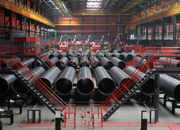 Threeway Steel is known as a professional supplier engaged in manufacturing and distributing a wide range of steel pipe, and our headquarter located the central part of China – Hunan and six associated factories throughout China.
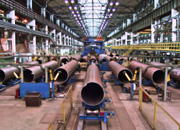 Threeway Steel is known as a professional supplier engaged in designing, manufacturing and distribution of a wide range of steel products with the headquarter located the central part of China – Hunan and six associated factories throughout China.
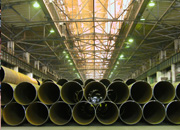 Threeway Steel is known as a professional supplier engaged in designing, manufacturing and distribution of a wide range of steel products with the headquarter located the central part of China – Hunan and six associated factories throughout China.
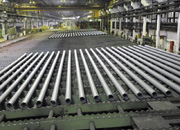 Threeway Steel is known as a professional supplier engaged in designing, manufacturing and distribution of a wide range of steel products with the headquarter located the central part of China – Hunan and six associated factories throughout China.
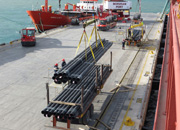 Threeway Steel is known as a professional supplier engaged in designing, manufacturing and distribution of a wide range of steel products with the headquarter located the central part of China – Hunan and six associated factories throughout China.