Square steel tubing is essential for construction and fabrication, but selecting the wrong size or grade can cause structural failure. Understanding load capacity is critical for safety and cost-efficiency.
1. Load capacity depends on several interacting variables:
2. Wall Thickness: The most critical factor; a 0.250" wall supports roughly three times the load of a 0.120" wall.
3. Tube Size: Larger cross-sections exponentially increase stiffness and bending resistance.
4. Material Grade: A500 Gr. C (50 ksi yield) offers about 9% higher capacity than standard Gr. B.
5. Unsupported Length: Doubling the span drops load capacity by approximately 75%, as long columns fail by buckling rather than crushing.
6. End Conditions & Loading Type: Rigid welds and distributed loads significantly alter capacity compared to pinned ends or point loads.
This article provides simplified calculation methods, application-based selection guidelines, and common mistakes to avoid when designing with square tubing. We also share our company’s recommended products and shipping information. Whether building equipment trailers, mezzanines, or industrial machinery, mastering these principles ensures safe, reliable structures and prevents costly collapses.
Key Factors That Determine Load Capacity
Square tubing load capacity is determined by multiple interacting variables. Changing any single factor can double or halve the maximum safe weight a tube can support.
Wall Thickness: This is the most direct variable. Thicker walls increase cross-sectional area and moment of inertia, resisting both crushing and buckling. For short columns, doubling wall thickness roughly doubles load capacity.
Tube Size (Outer Dimensions): Larger cross-sections dramatically increase bending stiffness. For horizontal beam applications, outer size matters significantly more than wall thickness, as larger dimensions exponentially resist bending.
Material Grade: Yield strength sets the stress limit before permanent deformation. Upgrading from standard A500 Gr. B (46 ksi) to Gr. C (50 ksi) increases capacity by about 9%. However, higher grades only improve performance when buckling is not the limiting factor.
Unsupported Length: Span length has an exponential effect on capacity. Doubling the unsupported span drops load capacity by approximately 75%. Long columns fail via Euler buckling at loads far below their yield strength.
End Conditions & Loading Type: Restraint methods drastically alter capacity. Fixed-fixed ends offer the highest capacity, pinned-pinned ends provide about 50%, and cantilevers offer only 25%. Furthermore, uniformly distributed loads allow a beam to support exactly double the total weight compared to a center point load.
Simplified Load Calculation Methods
Estimating square tubing load capacity requires understanding three basic scenarios: column loading, beam loading, and combined loading.
Column Loading (Compression): First, determine if the member is short or long. Short columns fail by crushing; calculate capacity using P = Fy × A (yield strength × cross-sectional area). Long columns fail by Euler buckling at loads far below yield strength; use the formula P = (π² × E × I) / L².
Beam Loading (Bending): For horizontal spans, calculate the section modulus (S). The maximum bending moment depends on the span and load type: center point loads use M = (P × L) / 4, while uniform distributed loads use M = (w × L²) / 8. Set the allowable moment equal to Fy × S to solve for the safe working load.
Combined Loading: When members experience both axial compression and bending, use interaction formulas: (Actual axial / Allowable axial) + (Actual bending / Allowable bending) ≤ 1.0.
Practical Shortcuts & Safety Warnings: For common sizes, refer to pre-calculated values in the AISC Manual Table 3-12. As a rule of thumb, reduce short column capacity by 50–80% for spans over 24 inches.
Crucially, never apply calculated failure loads directly. Always apply strict safety factors: 3–4:1 for static structures, 5–6:1 for human-occupied areas, and 8–10:1 for overhead lifting applications.
Application-Based Selection Guide
Selecting the right square tubing requires matching size, wall thickness, and grade to your specific application. Below are recommended starting points for common structural uses:
|
Application
|
Tube Size & Wall Thickness
|
Grade & Span
|
Load Expectation
|
|
Light Structural / Handrails
|
1"–1.5" square; 0.065"–0.083" (16–14 ga)
|
A500 Gr. B or A513; 36"–48" span
|
Light pedestrian/guardrail loads
|
|
Equipment Frames / Trailers
|
2"–3" square; 0.120"–0.188" (11 ga–3/16")
|
A500 Gr. B/C; 48"–72" span
|
1k–4k lbs/rail (4:1 safety factor)
|
|
Building Columns / Machinery
|
4"–6" square; 0.250"–0.500"
|
A500 Gr. B/C; 8'–20' height
|
20k–80k lbs/column (compression)
|
High-Strength Requirements: Upgrade to A500 Gr. C for ~9% higher capacity, or specify A513 mechanical tubing for precision applications like conveyors and robotics.
When designing, avoid critical mistakes such as ignoring buckling in long columns, confusing point load with distributed load capacity, neglecting end conditions, or forgetting dynamic safety factors.
For quick mental checks: always evaluate buckling for unsupported lengths over 36", remember that rigid welds add significant capacity compared to pinned ends, and apply a minimum 5:1 safety factor for human-occupied structures. When in doubt, increase the wall thickness or tube size by one increment—the minimal cost difference is well worth avoiding structural failure. As a general fabrication rule of thumb, a 2" x 2" x 0.120" A500 Gr. B tube on a 48" max span safely handles a 400–500 lb center point load with a 4:1 safety factor.
Square Tubing Product Recommendations & Shipping Information
|
Category
|
Key Specifications
|
|
A500 Gr. B (Structural)
|
46 ksi yield; 1"–8"; 0.065"–0.500" wall. General fabrication, trailers, columns. 20'/24' lengths with MTRs.
|
|
A500 Gr. C (High-Strength)
|
50 ksi yield (+9% capacity); 2"–6"; 0.120"–0.375" wall. Weight-sensitive structures.
|
|
A513 Mechanical
|
Tight tolerances; 1"–4"; 0.065"–0.250" wall. Conveyors, robotics, precision machinery.
|
|
Value-Add Services
|
Precision cutting (±1/16"), drilling, notching, coping, deburring, and third-party UT inspection.
|
|
Domestic Shipping (US)
|
2–5 days transit. Most sizes (1"–6") ship in 24 hrs. Steel-strapped with end caps/rust inhibitor.
|
|
International Shipping
|
FCL: 15–30 days. Breakbulk: 25–40 days. Global destinations. Includes MTRs and COO certificates.
|
|
Minimum Order Qty
|
Cut lengths: 20 linear feet. Full bundles: 200–600 ft (size dependent).
|
|
Get a Same-Day Quote
|
Provide size, grade, wall thickness, total footage, and load application details to our structural team.
|
Conclusion
Square steel tubing is highly versatile, but accurate load capacity calculation is essential for safety and cost-efficiency. Key variables include wall thickness, tube size, material grade, unsupported length, and end conditions. Notably, doubling the span reduces capacity by approximately 75%.
For quick estimations: use P = Fy × Area (with a 4:1 safety factor) for short columns, and AISC tables or section modulus methods for horizontal beams. Always consult an engineer for long columns where buckling controls.
Application guidelines suggest using 1"–1.5" tubes (0.065"–0.083" wall) for handrails, 2"–3" tubes (0.120"–0.188" wall) for equipment frames, and 4"–6" tubes (0.250"–0.500" wall) for heavy structural columns.
Avoid critical mistakes such as ignoring buckling in long spans, neglecting end condition effects, failing to apply proper safety factors (minimum 4:1), or assuming uniform yield strength across different grades. Proper selection prevents unsafe structures and unnecessary expenses.
FAQ:
(1) How do I calculate the load capacity of square tubing for a trailer frame?
For trailer frames, the critical load is typically bending from the axle to the coupler (beam loading). Start by determining the total trailer weight plus payload, then divide by the number of longitudinal frame rails. Use the beam formula for a distributed load over the span between axles and hitch point. For a typical 2" x 2" x 0.120" A500 Gr. B tube with a 60" span and simple supports, the distributed load capacity is approximately 4,000–5,000 lbs. However, always include a safety factor of at least 4:1 for road vibration and dynamic loads. AISC Design Manual Table 3-12 provides pre-calculated values for common sizes. When in doubt, increase wall thickness or tube size—the cost increment is small compared to a field failure.
(2) What is the strongest square tubing per pound of weight?
The strongest square tubing per unit weight balances wall thickness and overall size. For a given cross-sectional area (weight per foot), a larger tube with thinner walls generally provides higher bending stiffness (moment of inertia) than a smaller tube with thick walls. However, very thin walls (below 0.083") are prone to local buckling (wall crippling) under concentrated loads. The optimal for most structural applications is the largest practical size with a wall thickness between 0.120" and 0.250". For example, a 3" x 3" x 0.120" tube (4.5 lbs/ft) has roughly 2.5x the bending stiffness of a 2" x 2" x 0.250" tube (5.5 lbs/ft) despite weighing less. Always check both global buckling and local wall stability.

 Threeway Steel is known as a professional supplier engaged in manufacturing and distributing a wide range of steel pipe, and our headquarter located the central part of China – Hunan and six associated factories throughout China.
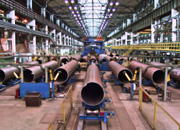 Threeway Steel is known as a professional supplier engaged in designing, manufacturing and distribution of a wide range of steel products with the headquarter located the central part of China – Hunan and six associated factories throughout China.
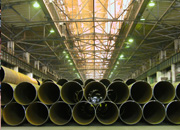 Threeway Steel is known as a professional supplier engaged in designing, manufacturing and distribution of a wide range of steel products with the headquarter located the central part of China – Hunan and six associated factories throughout China.
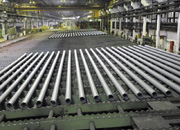 Threeway Steel is known as a professional supplier engaged in designing, manufacturing and distribution of a wide range of steel products with the headquarter located the central part of China – Hunan and six associated factories throughout China.
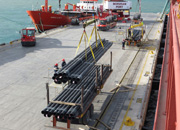 Threeway Steel is known as a professional supplier engaged in designing, manufacturing and distribution of a wide range of steel products with the headquarter located the central part of China – Hunan and six associated factories throughout China.