As a high-performance steel pipe product,
785D seamless steel pipe exhibits unique advantages in energy transmission, machinery manufacturing, and building structures. Its precise, seamless manufacturing process ensures the reliability of the steel pipe under high-pressure environments, while the unique chemical composition of 785D steel endows the material with excellent mechanical properties.
First, the core technical characteristics of 785D seamless steel pipe.
The fundamental reason why 785D seamless steel pipe is favored in many industrial fields lies in its superior material properties. From a microstructural perspective, 785D steel adopts a low-carbon alloy design, with the carbon content typically controlled within the range of 0.12%-0.18%, while adding alloying elements such as chromium and molybdenum. This composition ratio allows the material to achieve a significant increase in strength while maintaining good weldability. After heat treatment, the yield strength of 785D seamless steel pipe can reach over 785MPa, the tensile strength is maintained in the range of 930-1080MPa, and the elongation is maintained at around 13%, fully meeting the requirements of the API 5L standard for high-strength pipeline steel. In practical engineering applications, 785D seamless steel pipes exhibit three significant advantages: First, excellent low-temperature toughness; even in frigid environments of -40℃, their Charpy impact energy remains above 60J, which is crucial for oil and gas transportation in northern regions. Second, outstanding corrosion resistance; trace amounts of copper (0.2%-0.5%) in 785D steel form a dense passivation film with chromium, resulting in an annual corrosion rate of less than 0.1mm in acidic environments containing H2S. Third, good workability; its strain hardening index n reaches 0.12, far exceeding that of ordinary carbon steel, making the pipe less prone to cracking during secondary processing such as bending and flaring.
Particularly noteworthy is the advanced controlled rolling and cooling process (TMCP) used in 785D seamless steel pipes. By precisely controlling the rolling temperature (final rolling temperature controlled at 800±20℃) and cooling rate (20-30℃/s), a fine bainitic structure is obtained. This organizational control technology enables 785D steel pipes to maintain high strength while also possessing good plasticity and toughness, solving the technical problem of traditional high-strength steel being "strong but brittle." Comparative test data from an oil field show that, under the same pipe diameter and wall thickness conditions, the burst pressure of 785D seamless steel pipes is approximately 18% higher than that of X70 steel grade pipes, while fatigue life is extended by nearly 30%.
Second, the production process of 785D seamless steel pipes.
The production process of 785D seamless steel pipes incorporates several innovative achievements of modern metallurgical technology. In the smelting stage, a triple process of converter + LF furnace refining + RH vacuum degassing is adopted, controlling the content of harmful elements such as sulfur and phosphorus below 0.005%, and achieving clean steel levels ([H]≤1.5ppm, [O]≤15ppm). Production data from a large steel plant shows that this refining process stabilizes the inclusion rating of 785D steel at Class A ≤1.5, and Classes B, C, and D all ≤1.0, significantly improving the homogeneity of the material.
The piercing process utilizes an advanced conical roll piercing mill. The steel billet is heated to 1250℃ and hot-pierced with an elongation coefficient of 3.5-4.5. Temperature control is crucial; research shows that when the piercing temperature is below 1150℃, internal folding defects are easily generated, while above 1300℃, grain coarsening occurs. One company, by establishing a temperature-deformation mathematical model, reduced the piercing scrap rate from the traditional 1.2% to below 0.3%. The subsequent continuous rolling process uses a mandrel-driven continuous rolling mill (MPM), with continuous rolling across 7 stands, achieving wall thickness accuracy within ±5%, far exceeding the ±10% requirement of the ASTM A519 standard.
Heat treatment is the core process determining the final performance of the 785D seamless steel pipe. A dual heat treatment system of "quenching + tempering" is adopted: first, water quenching at 920℃ to obtain a martensitic structure; then tempering at 630℃ to form tempered sorbite. The control of process parameters is extremely strict. Practice at one factory shows that a tempering temperature deviation exceeding ±5℃ can lead to a decrease in impact toughness of more than 15%. An online inspection system monitors the temperature curve in real time to ensure the uniform heating of each steel pipe.
Non-destructive testing technology provides the final guarantee for the quality of 785D seamless steel pipes. Modern production lines are equipped with a triple inspection system consisting of a multi-channel ultrasonic flaw detector (detection sensitivity Φ1.6mm flat-bottomed holes), an eddy current flaw detector, and a laser diameter gauge. Statistics show that this configuration can achieve a defect detection rate of 99.97%, far exceeding the API standard requirement of 95%. The specially developed phased array ultrasonic testing technology (PAUT) can identify oblique defects that are difficult to detect using traditional methods, minimizing quality risks.
Third, Typical Application Scenarios and Engineering Practices of 785D Seamless Steel Pipes
- Oil and Gas Transportation: 785D seamless steel pipes are gradually becoming the preferred material for high-pressure trunk pipelines. A branch pipeline project of the West-East Gas Pipeline uses Φ813×20mm 785D steel pipes with a design pressure of 12MPa. Compared to traditional X80 grade steel pipes, the wall thickness is reduced by approximately 15%, resulting in a weight reduction of nearly 20 tons per kilometer of pipeline and significantly lower construction costs. More notably, in a corrosive environment with a CO2 partial pressure of 0.2MPa, wall thickness testing after 5 years of service showed that the maximum corrosion depth of the 785D steel pipe was only 0.08mm, with an annual corrosion rate of 0.016mm/a, demonstrating excellent corrosion resistance.
- In the construction machinery sector, the demand for 785D seamless steel pipes is showing a rapid growth trend. A well-known excavator manufacturer uses 785D steel pipes to manufacture hydraulic cylinders. While maintaining the same outer diameter, reducing the wall thickness from 12mm to 9mm reduced the cylinder weight by 25%, while increasing the working pressure from 35MPa to 42MPa. Actual testing shows that this type of hydraulic cylinder remained leak-free after 200,000 fatigue cycles, far exceeding the industry standard requirement of 100,000 cycles. In crane boom applications, the ultra-high strength of 785D tubing allows the main boom length of a 50-ton crane to exceed 45 meters, approximately 15% longer than booms made of traditional materials.
- In the building structure field: Innovative applications of 785D seamless steel tubing are being explored. A cross-sea bridge project used 785D steel tubing as anti-collision facilities for the bridge piers. Its unique strength-toughness combination successfully withstood the impact of a 50,000-ton ship at 6 knots, while deformation was kept within safe limits. Compared to traditional concrete protective structures, this steel tubing protective system is 60% lighter and offers the advantage of replaceable modules. In super high-rise buildings, giant support components made of 785D seamless steel tubing increased the building's seismic resistance from 8 to 9 degrees while reducing steel usage by approximately 30%.
Fourth, the technological development trends and market prospects of 785D seamless steel pipes.
In terms of materials research and development, 785D seamless steel pipes are developing towards "higher strength and better toughness." The improved 785D in the laboratory stage, through the addition of trace amounts of niobium (0.03%-0.05%) and titanium (0.01%-0.02%), has increased its strength to the 850MPa level, while maintaining an impact energy above 50J at -60℃. This nano-carbide strengthening technology is expected to be industrialized within the next 3-5 years, providing material support for polar oil and gas development.
In the manufacturing technology field, intelligent production is reshaping the quality control system of 785D seamless steel pipes. A digital twin system established in a demonstration plant simulates the entire process from steelmaking to pipe forming in real time, predicting potential quality fluctuations in advance through big data analysis, increasing the product qualification rate to 99.95%. The laser direct forming (DED) technology currently being tested promises to achieve one-time forming of irregularly shaped seamless steel pipes, which will provide a completely new pipe fitting solution for the aerospace field.
Market demand analysis shows that global demand for 785D seamless steel pipes is projected to grow at a compound annual growth rate of 8.5% over the next five years, with growth rates in offshore wind power and hydrogen energy potentially exceeding 20%. As the world's largest producer of seamless steel pipes, China accounts for over 60% of global production capacity for 785D grade products, but still relies on imports for approximately 30% of high-end products. With the launch of several major pipeline projects during the 14th Five-Year Plan period, the domestic production rate of 785D seamless steel pipes is expected to exceed 85%.
Upgrading environmental requirements are driving sustainable development and innovation in 785D seamless steel pipes. The latest low-carbon 785D steel grade utilizes a short-process electric arc furnace technology, combined with CO2 mineralization and storage technology, reducing carbon emissions per ton of steel from the traditional 2.1 tons to below 0.8 tons. A company has developed a 785D steel pipe recycling system, achieving a reuse rate of over 95% for waste pipes, forming a complete green industrial chain.
As a high-tech metallurgical product, the development level of 785D seamless steel pipes directly reflects a country's industrial manufacturing capabilities. With the deep integration of new materials technology, digital technology, and green technology, 785D seamless steel pipe will undoubtedly demonstrate its value in a wider range of fields, providing safer, more efficient, and more environmentally friendly pipeline solutions for modern industrial systems. The industry needs to continuously strengthen basic research, break through key processes, improve the standard system, and promote the development of this important material towards higher performance and lower cost.
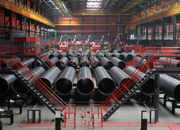 Threeway Steel is known as a professional supplier engaged in manufacturing and distributing a wide range of steel pipe, and our headquarter located the central part of China – Hunan and six associated factories throughout China.
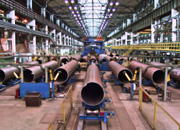 Threeway Steel is known as a professional supplier engaged in designing, manufacturing and distribution of a wide range of steel products with the headquarter located the central part of China – Hunan and six associated factories throughout China.
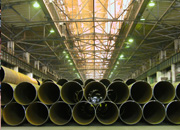 Threeway Steel is known as a professional supplier engaged in designing, manufacturing and distribution of a wide range of steel products with the headquarter located the central part of China – Hunan and six associated factories throughout China.
 Threeway Steel is known as a professional supplier engaged in designing, manufacturing and distribution of a wide range of steel products with the headquarter located the central part of China – Hunan and six associated factories throughout China.
 Threeway Steel is known as a professional supplier engaged in designing, manufacturing and distribution of a wide range of steel products with the headquarter located the central part of China – Hunan and six associated factories throughout China.