Technical casing and oil casing are two important categories used in oil and gas well construction, each serving distinct purposes with different performance requirements.
Technical casing is used during drilling to stabilize the wellbore, prevent formation collapse, and isolate unstable geological layers—supporting continued drilling operations in complex underground conditions.
Oil casing (production casing) is designed for long-term service, forming a protective channel between the wellbore and formation to enable safe oil and gas production. It must withstand high pressure, temperature changes, corrosion, and mechanical stress throughout the well's life.
Key differences include application stage, design requirements, material specifications, and strength performance. Selection depends on well depth, geological conditions, formation pressure, temperature, and production needs.
Most oil casing products comply with API 5CT standards for dimensions, steel grades, mechanical properties, and quality control.
Understanding Technical Casing and Oil Casing
Technical casing and oil casing are two important casing categories used in oil and gas wells, each with different functions and performance requirements.
Technical Casing:Installed during drilling to provide temporary or intermediate wellbore support. Its main functions include stabilizing unstable formations, preventing collapse, isolating pressure zones, and protecting drilling equipment. Selection focuses on structural support and well control during the drilling stage.
Oil Casing (Production Casing):Installed after drilling reaches target depth, providing a permanent structure for the well's operating life. It creates a sealed pathway for oil and gas flow, withstands internal pressure, external formation pressure, temperature changes, and corrosion. Manufactured to API 5CT standards in grades such as J55, K55, N80, L80, and P110.
Key Difference:Technical casing supports drilling operations; oil casing ensures long-term production integrity. Both are essential but selected based on well stage, depth, geological conditions, and pressure requirements
Key Differences Between Technical Casing and Oil Casing
Technical casing and oil casing are both essential in oil and gas well construction, but they differ in function, design, materials, and performance requirements. Understanding these differences helps ensure well safety, operational efficiency, and long-term productivity.
The table below provides a direct comparison of technical casing and oil casing.
Key Takeaway:Technical casing supports the drilling process and is selected based on wellbore stability needs. Oil casing provides long-term protection for production and requires higher performance in pressure, corrosion, and durability. These two casing types are not interchangeable—choosing the correct type for each stage is essential for well safety, risk reduction, and efficient oil and gas production.
How to Choose the Right Casing for Oil and Gas Projects
Selecting the appropriate casing is critical for maintaining well stability, ensuring drilling safety, and guaranteeing long-term production. Because geological and operating conditions vary, casing selection must be based on specific technical requirements rather than a one-size-fits-all approach.
Key Selection Factors
-
Well Depth & Geology: Deeper wells face higher external pressures and unstable formations, requiring casing with superior collapse resistance. Geological factors like rock stability and formation pressure directly dictate the required specifications.
-
Pressure & Temperature: Casing must withstand both internal production pressures and external formation pressures. High-pressure/high-temperature (HPHT) environments demand high-strength steel grades like N80, L80, or P110 to prevent deformation.
-
Casing Type: Technical casing stabilizes the wellbore and isolates formations during drilling, while oil casing provides long-term protection and a reliable channel for extraction.
-
Material & Corrosion: Wells exposed to corrosive elements (e.g., H2S, CO2, saltwater) require specialized corrosion-resistant materials. Products should comply with API 5CT standards to ensure consistent quality and performance.
-
Supplier Reliability: Partnering with a certified supplier ensures access to technical support, accurate quality inspection reports, and customized solutions tailored to your project's specific needs.
Our Technical Casing and Oil Casing Solutions and Global Shipping
We supply high-quality technical casing and oil casing solutions for exploration drilling, well construction, and production operations. Our products are available in various sizes, wall thicknesses, and steel grades (J55, K55, N80, L80, P110), manufactured to API 5CT standards.
Product Range:
-
Technical casing for wellbore support during drilling
-
API 5CT oil casing for long-term production
-
Seamless casing, threaded & coupled, and custom solutions
Quality Assurance:
-
Chemical analysis, mechanical testing, dimensional inspection, thread inspection
-
Custom sizes, grades, thread types, and lengths available
Global Shipping:
-
Secure packaging—steel strapping, thread protectors, waterproof wrapping
-
Container (20GP/40GP/40HQ) and bulk vessel options
-
Trade terms: EXW, FOB, CFR, CIF
From selection to delivery, we provide technical support and reliable logistics. Contact us today for durable casing solutions tailored to your well conditions.
Conclusion
Technical casing and oil casing are both essential in oil and gas well construction but serve different purposes. Technical casing supports the wellbore during drilling, prevents formation collapse, and isolates geological layers—selected based on well depth, formation characteristics, and drilling requirements. Oil casing provides long-term well protection during production, withstanding pressure, temperature, and corrosion while ensuring safe fluid flow.
Selection must consider geological conditions, well depth, pressure, temperature, corrosion risks, and production requirements. Choosing the wrong type increases operational risks. API 5CT-compliant products ensure consistent quality and reliability.
FAQ:
Q1: What is the difference between technical casing and oil casing?
-
Explain differences in purpose, application, design, and performance requirements.
Q2: Is technical casing the same as oil casing?
-
Clarify that they serve different functions in well construction and production.
Q3: What standards are used for oil casing pipes?
-
Explain API 5CT and related OCTG standards.
Q4: How do I choose the right casing pipe for an oil well?
-
Discuss factors such as depth, pressure, temperature, and geological conditions.
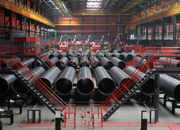 Threeway Steel is known as a professional supplier engaged in manufacturing and distributing a wide range of steel pipe, and our headquarter located the central part of China – Hunan and six associated factories throughout China.
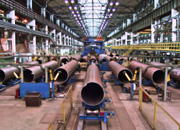 Threeway Steel is known as a professional supplier engaged in designing, manufacturing and distribution of a wide range of steel products with the headquarter located the central part of China – Hunan and six associated factories throughout China.
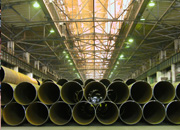 Threeway Steel is known as a professional supplier engaged in designing, manufacturing and distribution of a wide range of steel products with the headquarter located the central part of China – Hunan and six associated factories throughout China.
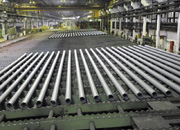 Threeway Steel is known as a professional supplier engaged in designing, manufacturing and distribution of a wide range of steel products with the headquarter located the central part of China – Hunan and six associated factories throughout China.
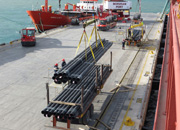 Threeway Steel is known as a professional supplier engaged in designing, manufacturing and distribution of a wide range of steel products with the headquarter located the central part of China – Hunan and six associated factories throughout China.