Both 20Cr13 and 304 are
stainless steel pipes. 20Cr13 is a martensitic stainless steel pipe. What is martensitic stainless steel? It's a stainless steel pipe whose properties are altered, and its strength is increased by quenching to obtain a martensitic structure from an austenitic structure.
Why does becoming martensitic stainless steel result in increased hardness? Essentially, when heated above the phase transformation temperature of the martensitic stainless steel, carbon atoms diffuse into the austenite grains. Rapid cooling to room temperature prevents these carbon atoms from precipitating out. These trapped carbon atoms within the austenite create lattice distortion, hindering deformation. This structure is martensite, exhibiting increased hardness. This process is called quenching, so 20Cr13 stainless steel pipes can be described as quenched. However, a prerequisite is that materials that can be called quenched must contain a certain amount of carbon to complete this process.
Meanwhile, 20Cr13 stainless steel pipes can also undergo other heat treatment processes, such as annealing and tempering. The choice of these processes depends on the desired final performance.
304 stainless steel is an austenitic stainless steel. What is austenitic stainless steel? It's stainless steel with an austenitic microstructure at room temperature. Its carbon content is very low, making it impossible to achieve the process of sufficient carbon atoms penetrating the austenitic microstructure at a specific temperature, as is done with 20Cr13 stainless steel, to form martensite. Therefore, the heat treatment process for 304 stainless steel cannot be called quenching. 304 stainless steel can only undergo solution treatment. The purpose of solution treatment is not to increase the strength of 304 stainless steel. Solution treatment acts more like "restoring the factory settings." After 304 stainless steel has undergone subsequent processing, such as welding, bending, and stamping, the unfavorable microstructure or work hardening produced by these processes is restored to a single austenitic microstructure through high temperature. This process is called solution treatment. Of course, 304 stainless steel also has other heat treatment processes, which will not be elaborated here.
Therefore, the quenching process does indeed transform austenitic stainless steel pipe into martensitic stainless steel pipe. However, quenching also requires a sufficient number of carbon atoms to penetrate the austenite and cause lattice distortion. Although 304 stainless steel pipe meets the characteristics of having an austenitic structure, its low carbon content prevents it from completing the lattice distortion process. Therefore, it cannot be called quenching in the field of metal materials science.
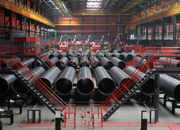 Threeway Steel is known as a professional supplier engaged in manufacturing and distributing a wide range of steel pipe, and our headquarter located the central part of China – Hunan and six associated factories throughout China.
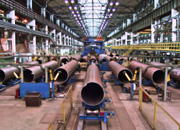 Threeway Steel is known as a professional supplier engaged in designing, manufacturing and distribution of a wide range of steel products with the headquarter located the central part of China – Hunan and six associated factories throughout China.
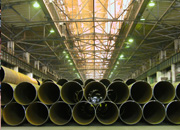 Threeway Steel is known as a professional supplier engaged in designing, manufacturing and distribution of a wide range of steel products with the headquarter located the central part of China – Hunan and six associated factories throughout China.
 Threeway Steel is known as a professional supplier engaged in designing, manufacturing and distribution of a wide range of steel products with the headquarter located the central part of China – Hunan and six associated factories throughout China.
 Threeway Steel is known as a professional supplier engaged in designing, manufacturing and distribution of a wide range of steel products with the headquarter located the central part of China – Hunan and six associated factories throughout China.