Pipeline construction in port and coastal areas presents unique challenges due to soft soil foundations, high groundwater levels, and aggressive corrosive conditions. These environments often cause uneven ground settlement, creating additional stress that can lead to pipeline deformation or structural failure if not properly managed.
In large-diameter applications, two major welded steel pipe types are commonly used: SSAW Steel Pipe (Spiral Submerged Arc Welded) and LSAW Steel Pipe (Longitudinal Submerged Arc Welded). SSAW pipes are formed by spirally winding steel strips, offering flexibility advantageous for ground movement. In contrast, LSAW pipes feature a straight longitudinal weld, providing higher rigidity and strength for high-pressure systems.
Selecting between SSAW and LSAW requires balancing mechanical adaptability with corrosion resistance. Understanding how these structures interact with unstable soil is the critical first step in ensuring long-term safety and cost efficiency for coastal infrastructure projects.
Understanding SSAW and LSAW Manufacturing Differences
SSAW and LSAW steel pipes are widely used in large-diameter applications, but their distinct manufacturing processes significantly influence their performance in soft soil and coastal environments.
SSAW Steel Pipe is produced by continuously forming steel coils into a spiral shape with a helical seam. This process allows for high material efficiency and the flexibility to produce various diameters from a single strip width. The spiral welding pattern distributes stress along a longer path, providing better adaptability under uneven external forces and ground movement.
In contrast, LSAW Steel Pipe is manufactured from individual steel plates using JCOE or UOE forming processes, resulting in a straight longitudinal weld. This creates a highly uniform and rigid cylindrical structure, making LSAW ideal for high-pressure transmission systems where structural precision is critical. However, the plate-based production involves more steps and typically higher costs compared to the continuous coil processing of SSAW.
Ultimately, the choice hinges on engineering needs: SSAW emphasizes flexibility, material efficiency, and stress adaptability, while LSAW focuses on superior structural rigidity and high-pressure strength. Understanding these fundamental differences is essential for selecting the right pipeline solution for challenging port and coastal construction projects.
Why SSAW Steel Pipe Excels in Soft Soil Foundations
|
Performance Factor
|
Key Advantages of SSAW Steel Pipe
|
|
Stress Distribution
|
The helical (spiral) weld seam distributes external loads evenly, reducing localized stress concentration compared to straight-seam pipes.
|
|
Adaptability to Settlement
|
Offers improved tolerance to differential settlement caused by tidal changes and groundwater fluctuation, lowering the risk of cracking or joint failure.
|
|
Structural Flexibility
|
Accommodates minor ground deformation without developing critical stress points, making it ideal for unstable coastal terrain.
|
|
Energy Absorption
|
Provides better resilience under external soil or water pressure by distributing stress gradually rather than along a single rigid line.
|
|
Design & Installation
|
Allows flexible diameter customization from steel coils, simplifying design adjustments for large-diameter piling and drainage projects.
|
|
Cost Efficiency
|
Higher material utilization and lower manufacturing waste result in significant cost savings for large-scale soft soil infrastructure projects.
|
Limitations of LSAW in Soft Soil Applications
|
Performance Factor
|
Key Limitations of LSAW Steel Pipe
|
|
Structural Rigidity
|
The straight longitudinal seam creates a highly rigid structure, which lacks the flexibility needed to adapt to unstable or continuously moving ground.
|
|
Settlement Tolerance
|
Exhibits low tolerance to differential settlement; uneven ground movement transfers direct stress to the pipe body and weld seam, increasing cracking risks.
|
|
Stress Concentration
|
Limited ability to absorb dynamic external forces (e.g., soil shifting, tidal influence) leads to stress accumulation at specific points like weld joints.
|
|
Installation Challenges
|
Requires precise alignment during laying; minor ground movement can affect pipeline alignment, increasing construction difficulty and rework costs.
|
|
Diameter Flexibility
|
Produced from steel plates rather than coils, limiting diameter adjustment flexibility and reducing efficiency for projects with varying design requirements.
|
Our Recommended SSAW Pipe Products and Global Shipping Services
For port, coastal, and soft soil foundation projects, selecting reliable large-diameter steel pipes is essential for long-term stability. We supply high-quality SSAW Steel Pipe solutions specifically designed to withstand settlement, moisture, and external stress in challenging ground conditions.
Our product range features advanced spiral welded pipes ideal for piling, drainage, and foundation support. Available in a wide selection of diameters and wall thicknesses, we offer common API 5L grades (X42, X52, X60, X70) to meet diverse engineering requirements. Every pipe undergoes strict quality control, including ultrasonic weld testing, hydrostatic pressure testing, and dimensional inspection to ensure full compliance with international standards
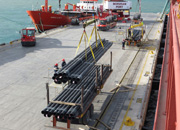
To support global infrastructure demands, we provide comprehensive logistics services tailored for large-scale EPC projects. Flexible shipping options include container transport and bulk vessel shipment. All pipes are securely packaged with protective end caps and moisture-resistant wrapping to prevent damage during transit. We also provide complete export documentation, such as Mill Test Certificates (MTC). With superior structural performance and reliable global delivery, our SSAW solutions ensure flexibility and durability for your coastal construction needs.
Installation Considerations in Soft Soil and Coastal Areas
Installing pipelines in soft soil and coastal environments requires careful engineering planning to address unstable ground, high groundwater levels, and corrosion risks. Even high-quality SSAW Steel Pipe must be installed using strict methods that account for settlement and environmental stress.
Ground preparation is the most critical step. Since soft soil lacks sufficient bearing capacity, the trench or foundation bed must be stabilized before installation. This often involves soil replacement, compaction, or laying sand bedding to create a uniform, supportive base that minimizes uneven settlement and reduces pipeline stress.
Proper handling during installation is equally essential. Large-diameter SSAW pipes are heavy and sensitive to impact; they should be lifted with appropriate slings to avoid damaging the pipe surface or protective coating. Controlled lowering into trenches prevents sudden impacts with the soil bed. In corrosive coastal environments, ensuring continuous anti-corrosion coating—especially at field joints—is vital for long-term durability.
Backfilling procedures must also be strictly controlled. Use fine soil or sand in layers to avoid point loading from large rocks or hard debris, which can damage coatings. Gradual compaction ensures even pressure distribution around the pipeline. Additionally, alignment and settlement should be monitored regularly during early operations to identify any unexpected movement. Finally, all field welds must undergo non-destructive testing to guarantee structural integrity. Adhering to these practices fully realizes the performance advantages of SSAW pipelines in challenging coastal projects.
Conclusion
Pipeline selection for soft soil and coastal construction goes beyond simple strength ratings—it's about adapting to unstable ground, settlement, and harsh marine environments. In these scenarios, structural flexibility often outweighs maximum rigidity.
SSAW Steel Pipe demonstrates clear advantages in these conditions. Its spiral weld structure ensures better stress distribution, effectively reducing localized stress caused by uneven ground settlement. This makes it highly suitable for port engineering and large-scale coastal infrastructure where soil movement is expected. Additionally, its production flexibility offers significant cost efficiency.
In contrast, LSAW Steel Pipe excels in stable ground and high-pressure transmission systems due to its rigid straight-seam structure. However, this rigidity becomes a limitation in soft soils, where differential settlement can cause dangerous stress concentrations along the longitudinal weld.
Ultimately, successful pipeline projects depend on matching pipe behavior with soil conditions. For soft soil foundations, SSAW pipes provide the ideal balance of flexibility, adaptability, and cost-effectiveness, ensuring safe and durable long-term performance.
FAQ:
(1) Why is SSAW pipe preferred in soft soil foundations?
Explanation of flexibility and stress distribution advantages
(2) Is SSAW suitable for offshore and coastal projects?
Application in marine piling and coastal infrastructure
(3) What is the main difference between SSAW and LSAW pipes?
Manufacturing and structural comparison
(4) Which pipe is more cost-effective for large-diameter projects?
Cost comparison and material efficiency discussion
 Threeway Steel is known as a professional supplier engaged in manufacturing and distributing a wide range of steel pipe, and our headquarter located the central part of China – Hunan and six associated factories throughout China.
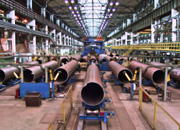 Threeway Steel is known as a professional supplier engaged in designing, manufacturing and distribution of a wide range of steel products with the headquarter located the central part of China – Hunan and six associated factories throughout China.
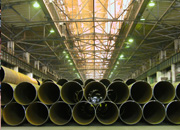 Threeway Steel is known as a professional supplier engaged in designing, manufacturing and distribution of a wide range of steel products with the headquarter located the central part of China – Hunan and six associated factories throughout China.
 Threeway Steel is known as a professional supplier engaged in designing, manufacturing and distribution of a wide range of steel products with the headquarter located the central part of China – Hunan and six associated factories throughout China.
 Threeway Steel is known as a professional supplier engaged in designing, manufacturing and distribution of a wide range of steel products with the headquarter located the central part of China – Hunan and six associated factories throughout China.