Cold-rolled H-beams are essential high-precision structural components in modern construction and industrial engineering. Unlike traditional hot-rolled sections, they are processed at room temperature, delivering tighter dimensional tolerances, superior surface quality, and consistent structural performance.
These beams excel in precision construction machining, making them ideal for prefabricated buildings, modular steel structures, and high-rise projects requiring exact assembly. Their smooth surface finish significantly enhances welding quality and coating adhesion, reducing secondary machining needs and lowering overall project costs.
As the industry shifts toward modular design and digital engineering, cold-rolled H-beams provide the accuracy and fabrication efficiency that engineers demand. This article explores their key advantages over hot-rolled alternatives, guides you in selecting the right beam for your application, and introduces our global supply solutions to support efficient international project delivery.
What Are Cold-Rolled H-Beams?
Cold-rolled H-beams are high-precision structural steel sections formed at or near room temperature. Unlike traditional hot-rolled beams, this manufacturing process delivers superior dimensional accuracy, a smoother surface finish, and exceptional consistency, making them ideal for precision construction machining and advanced engineering applications.
During cold rolling, steel base materials are shaped through a series of rollers without high-temperature deformation. This ensures tight tolerances in flange width, web thickness, and overall beam geometry. Such strict dimensional control is vital for modern prefabricated and modular construction, as it significantly reduces installation errors, minimizes on-site adjustments, and boosts overall assembly efficiency.
A major advantage of cold-rolled H-beams is their clean, uniform surface free from high-temperature scaling. This excellent surface condition enhances downstream processes like welding, painting, and galvanizing, improving coating adhesion and extending corrosion protection life. Mechanically, they offer highly consistent strength distribution across the section. While designed more for precision alignment and structural stability than extreme heavy-load resistance, they deliver outstanding performance in steel structure buildings, industrial facilities, and machinery frameworks where accurate fabrication is critical to project success.
Advantages of Cold-Rolled H-Beams in Precision Construction Machining
|
Key Advantage
|
Core Benefits & Applications
|
|
High Dimensional Accuracy
|
Tighter tolerances in flange and web dimensions reduce alignment issues, minimize rework, and ensure perfect compatibility with prefabricated components.
|
|
Improved Structural Consistency
|
Uniform mechanical properties enhance load distribution, eliminate weak points, and provide reliable performance for steel frame assemblies.
|
|
Superior Surface Quality
|
Smooth, scale-free finish improves welding and cutting processes while ensuring better adhesion for paint and galvanization coatings.
|
|
Enhanced Construction Efficiency
|
Accurate dimensions minimize secondary machining and material waste, lowering costs and accelerating on-site assembly speed.
|
|
Ideal for Precision Systems
|
Predictable geometry allows seamless integration into modular structures, high-rise frameworks, and machinery supports.
|
Comparison: Cold-Rolled vs Hot-Rolled H-Beams
|
Comparison Dimension
|
Cold-Rolled H-Beams
|
Hot-Rolled H-Beams
|
|
Production Process
|
Formed at or near room temperature with controlled rolling for tight precision.
|
Shaped at high temperatures (above recrystallization point) for efficient mass production.
|
|
Dimensional Accuracy
|
Strict tolerances in flange, web, and straightness; ideal for precise prefabrication.
|
Wider tolerances that may require additional on-site adjustments during installation.
|
|
Surface Quality
|
Smooth, clean, and scale-free finish, enhancing welding and coating adhesion.
|
Rougher surface with oxide scale, often requiring extra treatment before finishing.
|
|
Mechanical Performance
|
Consistent material properties; optimized for precision alignment over max load.
|
Strong overall structural capacity; preferred for heavy-duty load-bearing applications.
|
|
Application Scenarios
|
Modular construction, prefab buildings, machinery structures, and high-precision systems.
|
Bridges, large industrial plants, and heavy general structural frameworks.
|
|
Cost Efficiency
|
Higher unit cost, but reduces overall expenses by minimizing machining and rework.
|
Generally more economical due to large-scale production efficiency.
|
How to Choose the Right H-Beam for Precision Construction Projects
Selecting the right H-beam for precision construction projects requires balancing structural load, dimensional accuracy, and fabrication efficiency. The choice between cold-rolled and hot-rolled beams depends heavily on your project's specific demands.
For heavy load-bearing structures like bridges and large industrial plants, hot-rolled H-beams are typically preferred due to their superior load capacity and cost efficiency. However, if your project involves modular assembly or prefabricated buildings, cold-rolled H-beams are the ideal choice. Their tighter dimensional tolerances and consistent geometry significantly reduce installation errors and minimize the need for on-site adjustments.
Surface condition is another critical factor. Cold-rolled beams offer a smooth, scale-free finish that enhances welding quality and coating adhesion, which is vital for corrosion protection and aesthetic appeal. In contrast, hot-rolled beams often require additional surface preparation.
From an efficiency standpoint, cold-rolled H-beams save time and labor by reducing secondary machining, making them perfect for fast-track projects. While hot-rolled beams generally have a lower initial material cost, cold-rolled options can lower total project expenses by minimizing waste and installation time. Always ensure your selection complies with relevant engineering standards to guarantee safety and long-term structural reliability.
Our Recommended Cold-Rolled H-Beam Products and Global Shipping Services
To meet the demands of precision construction machining, we supply a comprehensive range of high-quality cold-rolled H-beams. Our product lineup includes standard precision beams, heavy-duty options, and fully customized solutions tailored to specific engineering drawings. Manufactured in strict compliance with ASTM, EN, and JIS standards, every beam ensures exceptional dimensional accuracy, stable mechanical properties, and a superior surface finish. We guarantee full material traceability with complete Mill Test Certificates (MTC) and offer third-party inspection services to meet rigorous project specifications.
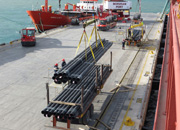
Beyond premium products, we provide professional global shipping and logistics support. Our robust export network covers Asia, Europe, the Americas, and beyond. All H-beams are carefully packaged with protective materials to prevent damage during transit. Whether via container or bulk cargo, our dedicated team handles all customs documentation and shipment tracking, ensuring safe, efficient, and timely delivery to your project site worldwide.
Conclusion
Cold-rolled H-beams represent a significant advancement in modern steel engineering, offering superior dimensional accuracy, smooth surface quality, and fabrication efficiency compared to traditional hot-rolled beams. Their strict tolerance control minimizes on-site adjustments, making them indispensable for precision construction machining, prefabricated buildings, and modular steel structures.
The excellent surface finish of cold-rolled beams also enhances welding quality and coating adhesion, extending the service life of industrial facilities and machinery frameworks. However, hot-rolled H-beams remain essential for heavy infrastructure projects where maximum load-bearing capacity and cost efficiency are the top priorities.
Ultimately, selecting the right beam requires balancing structural loads, precision needs, and budget constraints. As the industry shifts toward modular design and digital engineering, cold-rolled H-beams provide the accuracy and reliability needed for future construction success. Making an informed choice ensures optimized performance, reduced material waste, and long-term structural stability for any project.
FAQ:
(1) What is the main advantage of cold-rolled H-beams over hot-rolled H-beams?
Focus on precision, surface quality, and dimensional accuracy
(2) Are cold-rolled H-beams suitable for load-bearing structures?
Yes, depending on design and engineering requirements
(3) Can cold-rolled H-beams reduce machining costs?
Yes, due to reduced secondary processing needs
(4) What industries commonly use precision H-beams?
Construction, machinery manufacturing, steel structures, and industrial plants

 Threeway Steel is known as a professional supplier engaged in manufacturing and distributing a wide range of steel pipe, and our headquarter located the central part of China – Hunan and six associated factories throughout China.
 Threeway Steel is known as a professional supplier engaged in designing, manufacturing and distribution of a wide range of steel products with the headquarter located the central part of China – Hunan and six associated factories throughout China.
 Threeway Steel is known as a professional supplier engaged in designing, manufacturing and distribution of a wide range of steel products with the headquarter located the central part of China – Hunan and six associated factories throughout China.
 Threeway Steel is known as a professional supplier engaged in designing, manufacturing and distribution of a wide range of steel products with the headquarter located the central part of China – Hunan and six associated factories throughout China.
 Threeway Steel is known as a professional supplier engaged in designing, manufacturing and distribution of a wide range of steel products with the headquarter located the central part of China – Hunan and six associated factories throughout China.