Pipe connection methods are fundamental to the reliability, installation speed, and overall cost of modern piping systems in water supply, HVAC, and fire protection. Among the most widely adopted mechanical solutions are threaded pipe fittings and grooved pipe fittings.
Threaded connections remain a traditional choice valued for their simplicity and low equipment requirements. However, they involve time-consuming steps like cutting and sealing. In contrast, grooved (mechanical) connections represent a highly efficient modern approach. By utilizing couplings and gaskets instead of threading or welding, grooved systems allow for significantly faster assembly and easy disassembly. This makes them ideal for large-scale commercial and industrial projects where reducing labor costs and enabling quick future modifications are critical priorities. Understanding these differences is essential for engineers aiming to optimize construction efficiency and long-term system performance.
What Are Threaded Pipe Fittings?
Threaded pipe fittings are one of the most traditional and widely used methods for connecting pipes in plumbing and industrial systems. They rely on helical threads machined onto pipe ends and matching fittings (such as elbows, tees, and couplings). When screwed together with sealing materials like PTFE tape or pipe compounds, these fittings create a strong, leak-resistant mechanical joint.
Advantages and Applications
-
Threaded connections offer several practical benefits:
-
Simple installation: Requires only basic tools without the need for welding.
-
Cost-effective: Low material and equipment costs.
-
Accessibility: Widely available and easy to replace.
-
Because of these advantages, they are commonly used in residential plumbing, small-diameter piping, and low-pressure applications.
Limitations
-
Despite their popularity, threaded fittings have notable drawbacks for modern large-scale projects:
-
Time-consuming: The process of cutting, threading, cleaning, and sealing increases labor intensity.
-
Skill-dependent: Requires skilled labor to ensure proper alignment and prevent leaks.
-
Durability concerns: Not ideal for high-pressure or high-vibration systems, and repeated disassembly can damage threads.
What Are Grooved Pipe Fittings?
Grooved pipe fittings are a modern mechanical connection system that joins pipes using circumferential grooves, rubber gaskets, and mechanical couplings. This method eliminates the need for welding or threading, offering a fast and flexible solution for various piping applications.
|
Feature
|
Details
|
|
Working Principle
|
Pipes are joined by placing a rubber sealing gasket over grooved ends and clamping them with a two-piece coupling housing. Tightening the bolts compresses the gasket to form a secure, leak-resistant seal while absorbing vibration.
|
|
Installation Process
|
1. Cut pipe to length.
2. Form grooves using a grooving machine.
3. Place the sealing gasket over the joint.
4. Position the coupling housing and tighten bolts evenly.
|
|
Advantages
|
Extremely fast installation speed; no welding or threading required; easy system modification and expansion; excellent vibration and noise reduction; reduced labor intensity and training requirements.
|
|
Limitations
|
Higher initial cost for fittings and equipment; requires precise groove cutting for proper sealing; not suitable for all specialized high-pressure applications; long-term reliability depends on gasket material quality.
|
Threaded vs. Grooved: Which Saves More Installation Time?
In modern piping projects, installation time and labor efficiency are critical factors. The following comparison highlights the key differences between threaded and grooved pipe fittings in terms of speed, labor requirements, and maintenance.
|
Comparison Factor
|
Threaded Pipe Fittings
|
Grooved Pipe Fittings
|
|
Installation Speed
|
Slower due to multiple sequential steps: cutting, threading, applying sealant, and manual tightening. Highly labor-intensive for large systems.
|
Significantly faster mechanical assembly. Eliminates threading; involves simple grooving, gasket placement, and bolt tightening. Ideal for high-volume networks.
|
|
Labor Requirements
|
Requires skilled workers to accurately cut threads and ensure proper sealing. Mistakes often lead to leaks and increased rework time.
|
Requires less specialized skill and basic training. Reduces labor dependency and speeds up workforce deployment on construction sites.
|
|
Maintenance & Modifications
|
Difficult to dismantle. Disassembly often damages threads, making reinstallation slower and complicating future system expansions.
|
Allows quick disassembly and reassembly without damaging pipe ends. Highly suitable for systems requiring frequent maintenance or modifications.
|
Recommended Pipe Fittings and Global Shipping Services
We supply a comprehensive range of high-quality threaded and grooved pipe fittings, including elbows, tees, couplings, and valves made from carbon steel, stainless steel, and ductile iron. Manufactured under strict ISO, ASTM, and ANSI standards, our fittings ensure precise dimensional control, strong sealing performance, and excellent corrosion resistance for HVAC, fire protection, and industrial systems.
To support global projects, we provide efficient export logistics to the Middle East, Africa, Europe, and the Americas. All products are carefully packaged with protective materials to prevent damage during transit—ensuring threads remain undamaged and groove accuracy is maintained. With flexible shipping options (sea, air, and container freight) and complete export documentation, we guarantee safe, timely delivery for your construction and engineering needs.
Conclusion: Choosing Between Threaded and Grooved Fittings
Selecting between threaded and grooved pipe fittings requires balancing installation speed, system requirements, and long-term operational needs.
Threaded pipe fittings remain a practical, cost-effective choice for small-diameter and low-pressure systems. However, their multi-step installation process is labor-intensive and time-consuming. In contrast, grooved pipe fittings are engineered for maximum efficiency. Their mechanical coupling design eliminates welding and threading, significantly reducing installation time and labor costs while allowing for easy future modifications.
For large-scale commercial, industrial, and fire protection projects, grooved systems clearly lead in construction efficiency. Ultimately, engineers should evaluate specific project factors—such as pressure ratings, labor availability, and maintenance expectations—to make the optimal decision. Understanding these distinct advantages ensures improved project performance and reliable, long-term piping system operation.
FAQ:
(1) Which is faster to install, threaded or grooved pipe fittings?
Grooved fittings are generally faster due to mechanical assembly
(2) Are grooved fittings suitable for high-pressure systems?
Explanation of pressure ratings and system design limits
(3) Can threaded fittings be reused after disassembly?
Reusability conditions and limitations
(4) What tools are required for grooved pipe installation?
Groove cutter, coupling tools, and torque equipment
 Threeway Steel is known as a professional supplier engaged in manufacturing and distributing a wide range of steel pipe, and our headquarter located the central part of China – Hunan and six associated factories throughout China.
 Threeway Steel is known as a professional supplier engaged in designing, manufacturing and distribution of a wide range of steel products with the headquarter located the central part of China – Hunan and six associated factories throughout China.
 Threeway Steel is known as a professional supplier engaged in designing, manufacturing and distribution of a wide range of steel products with the headquarter located the central part of China – Hunan and six associated factories throughout China.
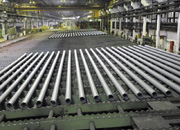 Threeway Steel is known as a professional supplier engaged in designing, manufacturing and distribution of a wide range of steel products with the headquarter located the central part of China – Hunan and six associated factories throughout China.
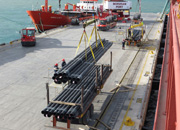 Threeway Steel is known as a professional supplier engaged in designing, manufacturing and distribution of a wide range of steel products with the headquarter located the central part of China – Hunan and six associated factories throughout China.