High-frequency welded (HFW) steel pipes are essential industrial products manufactured by forming steel strips and joining the edges using high-frequency electrical resistance. This continuous process ensures high manufacturing efficiency, stable dimensions, and reliable weld quality.
HFW steel pipes offer superior dimensional accuracy, reducing the need for additional processing during installation. They are widely used in construction, energy pipelines, machinery manufacturing, and automotive applications due to their excellent mechanical properties and cost-effectiveness.
To guarantee consistent performance, professional manufacturers implement strict quality control, including precise raw material selection, welding parameter management, and comprehensive weld testing. This ensures the pipes meet rigorous industry standards.
Overall, high-frequency welded steel pipes provide an ideal balance of strength, precision, and affordability. Their efficient production and dependable quality make them a preferred material choice for diverse engineering and industrial projects worldwide.
Key Performance Characteristics of High-Frequency Welded Steel Pipes
High-frequency welded (HFW) steel pipes are widely utilized in industrial and engineering applications due to their balanced performance and reliable quality. Understanding their key performance characteristics helps users select the optimal pipe solution for various projects.
|
Characteristic
|
Key Features and Benefits
|
|
High Weld Strength
|
Rapid heating and pressure bonding create a stable joint with mechanical performance close to the base material, ensuring safety and durability under pressure.
|
|
Excellent Dimensional Accuracy
|
Precise control over outer diameter, wall thickness, and straightness simplifies installation, reduces machining needs, and improves component compatibility.
|
|
High Production Efficiency
|
Continuous manufacturing allows for faster welding speeds, shorter production cycles, stable supply, and better cost control for large-scale projects.
|
|
Good Surface Quality
|
Smooth, uniform surfaces reduce defects and enhance the effectiveness of subsequent surface treatments like painting, galvanizing, and anti-corrosion coatings.
|
|
Reliable Mechanical Properties
|
Proper manufacturing and heat treatment provide excellent tensile strength, toughness, and resistance to mechanical stress in demanding environments.
|
|
Strong Adaptability
|
Highly customizable in various sizes, steel grades, wall thicknesses, and testing standards to meet specific requirements across diverse industries.
|
By combining strong weld performance, high dimensional accuracy, and excellent surface quality, high-frequency welded steel pipes offer a reliable and cost-effective solution. Their adaptability and efficient production make them an ideal choice for modern construction, machinery, and industrial engineering applications
Manufacturing Process and Quality Control of High-Frequency Welded Steel Pipes
The manufacturing process and strict quality control of high-frequency welded (HFW) steel pipes directly determine their strength, accuracy, and service performance. By combining advanced forming technology, precise welding, and comprehensive inspections, manufacturers ensure reliable weld quality and consistent mechanical properties.
|
Production Stage
|
Key Actions and Benefits
|
|
Raw Material Preparation
|
Selecting steel coils with stable chemical and mechanical properties. Inspecting surface quality and thickness ensures a reliable foundation for pipe strength and durability.
|
|
Steel Strip Forming
|
Gradually bending the strip into a round shape via forming rollers. Precise alignment and geometry control are essential to prevent defects and guarantee consistent weld quality.
|
|
High-Frequency Welding
|
Utilizing high-frequency electrical current to rapidly heat and press the edges. This ensures fast welding speeds, strong joints, and a narrow heat-affected area.
|
|
Sizing & Post-Treatment
|
Passing the pipe through sizing equipment for accurate dimensions and straightness. Additional cutting or heat treatments reduce internal stress and meet specific customer specs.
|
|
Quality Control & Inspection
|
Conducting rigorous testing, including dimensional checks, ultrasonic testing, hydrostatic pressure tests, and mechanical property assessments to verify reliability and standard compliance.
|
Effective production management and advanced high-frequency welding technology are crucial for maintaining consistent product quality. Through strict manufacturing controls at every stage, HFW steel pipes achieve reliable weld strength and accurate dimensions, making them a dependable solution for construction, industrial, and energy applications.
Our High-Frequency Welded Steel Pipe Products and Global Shipping Services
We supply high-quality HFW steel pipes designed for construction, industrial, and energy projects. Manufactured with advanced technology and strict quality control, our pipes offer reliable weld strength, accurate dimensions, and excellent surface quality.
Our comprehensive range includes standard, precision, structural, and mechanical HFW pipes, alongside fully customized solutions tailored to specific project requirements. Ideal for diverse engineering applications, our products ensure high efficiency and stable performance.
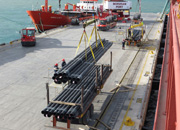
To support global clients, we provide efficient international shipping via sea or rail. Every order features secure packaging and comprehensive export documentation to ensure smooth customs clearance and on-time delivery.
Partner with us for dependable HFW steel pipes and professional logistics support. We are committed to delivering consistent quality, customized manufacturing, and long-term value for your industrial and structural needs.
Applications and Selection Guide for High-Frequency Welded Steel Pipes
High-frequency welded (HFW) steel pipes are widely utilized across various industries due to their reliable weld strength, accurate dimensions, and flexible specifications. However, selecting the right HFW steel pipe requires careful consideration of application conditions and project standards to ensure optimal system reliability and long-term performance.
|
Industry Sector
|
Primary Uses and Benefits
|
|
Construction
|
Structural frameworks, supports, and building components. Consistent dimensions and good mechanical strength ensure stable load-bearing performance and efficient installation.
|
|
Energy & Pipelines
|
Transportation systems and industrial pipelines. Strong welded joints handle various operating conditions; requires consideration of pressure and corrosion protection.
|
|
Machinery & Equipment
|
Equipment frames and mechanical components. Accurate dimensions improve assembly efficiency and reduce the need for additional processing.
|
|
Automotive
|
Structural components requiring high strength and precision. Consistent quality supports high-volume manufacturing while maintaining reliable performance.
|
|
Selection Factor
|
Key Considerations and Requirements
|
|
Application Requirements
|
Identify load conditions, operating pressure, temperature range, and exposure to moisture or chemicals to determine the appropriate pipe design.
|
|
Dimensions
|
Ensure pipe diameter, wall thickness, length, and tolerance requirements accurately match the application to improve installation efficiency.
|
|
Material & Performance
|
Evaluate steel grades based on tensile strength, toughness, corrosion resistance, and weld performance to suit specific operational needs.
|
|
Quality Standards
|
Verify that the supplier provides products meeting relevant industry standards, supported by comprehensive inspection documentation and testing.
|
Conclusion
High-frequency welded (HFW) steel pipes are a vital material solution for modern engineering, offering reliable performance, strong weld quality, and precise dimensions. Their advanced manufacturing and strict quality control ensure durability and cost-effectiveness across construction, energy, machinery, and automotive industries.
HFW pipes provide excellent adaptability through customizable sizes, steel grades, and surface treatments. Proper selection based on operating environments and load requirements is crucial for maximizing their efficiency and lifespan.
Partnering with an experienced supplier is equally important. Professional manufacturers provide customized production, rigorous inspection, and efficient global shipping to guarantee that products meet strict project schedules and industry standards.
Ultimately, HFW steel pipes deliver an ideal balance of manufacturing efficiency and dependable performance. By combining advanced production technology with proper application selection, they provide long-term reliability and strong value for diverse industrial projects.
FAQ:
(1) What are the main advantages of high-frequency welded steel pipes?
High weld strength
Good dimensional accuracy
Efficient production
Cost-effectiveness
Wide application range
(2) How are high-frequency welded steel pipes manufactured?
Steel coil preparation
Pipe forming
High-frequency welding
Sizing and straightening
Quality inspection
(3) What is the difference between high-frequency welded steel pipes and seamless steel pipes?
Manufacturing methods
Weld seam characteristics
Cost differences
Application suitability
(4) What industries use high-frequency welded steel pipes?
Construction
Energy
Automotive
Machinery
Infrastructure projects
 Threeway Steel is known as a professional supplier engaged in manufacturing and distributing a wide range of steel pipe, and our headquarter located the central part of China – Hunan and six associated factories throughout China.
 Threeway Steel is known as a professional supplier engaged in designing, manufacturing and distribution of a wide range of steel products with the headquarter located the central part of China – Hunan and six associated factories throughout China.
 Threeway Steel is known as a professional supplier engaged in designing, manufacturing and distribution of a wide range of steel products with the headquarter located the central part of China – Hunan and six associated factories throughout China.
 Threeway Steel is known as a professional supplier engaged in designing, manufacturing and distribution of a wide range of steel products with the headquarter located the central part of China – Hunan and six associated factories throughout China.
 Threeway Steel is known as a professional supplier engaged in designing, manufacturing and distribution of a wide range of steel products with the headquarter located the central part of China – Hunan and six associated factories throughout China.