First, prepare the
welded steel pipe before welding:
1. Determine welding materials: Select appropriate steel pipes and welding materials according to actual needs to ensure welding quality.
2. Prepare tools: Obtain the appropriate welding machines and tools, and perform maintenance and repair work.
3. Pre-treat the welded steel pipe: The surface of the welded steel pipe must be cleaned, degreased, and ground before welding to ensure weld strength.
Second, welded steel pipe safety measures during the welding process:
1. Protect your own safety: Wear protective equipment such as a welding helmet, welding goggles, gloves, and protective clothing.
2. Welding site preparation: Ensure that there are no flammable or explosive materials around the welding area to avoid fire or explosion accidents.
3. Control the current: Adjust the current according to different materials and the external environment to ensure welding quality.
Third, welded steel pipe quality inspection after welding:
1. Visual inspection: Inspect the weld penetration and the quality of the fusion seam to ensure welding quality.
2. Sound Inspection: Tap the weld joint of the welded steel pipe with a tool and listen to the sound to judge the size and quality of the weld pool.
3. Current Density Inspection: Use a special instrument to check the current density to ensure the quality of the welded steel pipe after welding.
Summary: Before welding steel pipes, the welding materials must be selected and preparations made. During welding, pay attention to personal safety, control the current, and operate with caution. After welding, visual inspection, sound inspection, and current density inspection can be performed to ensure the quality of the pipeline.
Welded steel pipes refer to welded steel pipes with seams on the surface, made by bending and deforming steel strips or plates into round, square, or other shapes and then welding them. The raw material used for welded steel pipes is steel plate or strip.
1. According to the application, welded steel pipes are divided into general-purpose and high-temperature and high-pressure applications. The latter often uses special alloy steel, and it is necessary to consider and solve the problem of shrinkage cracks in the weld during the welding process, and to ensure that the mechanical properties of the welded steel pipe are not excessively affected by the welding operation.
2. Based on the wall thickness, welded steel pipes made of relatively thin materials, such as steel strips, can be welded using high-frequency welding. Some thin-walled welded steel pipes can be welded using shielded gas welding. Welded steel pipes with a wall thickness exceeding 2mm can be welded using manual arc welding.
3. Based on the diameter, welded steel pipes can be divided into those with small diameters that can only be welded on one side and those where a skilled worker can drill into the pipe to perform welding on both sides. Single-sided welding places higher demands on the welder's skills, requiring them to achieve two-sided weld formation. A steel ball test must be conducted to ensure that the cross-sectional area and weld formation meet design requirements.
4. Whenever the welded steel pipe material is high-strength alloy steel, including high-temperature resistant, pressure-resistant, wear-resistant, and low-temperature resistant alloy steel pipes, the welding process must focus on preventing the formation of martensitic structures and cracking due to high-temperature welding operations. Generally, this requires the selection of appropriate welding rods. The welders should be provided with the welded steel pipes as required. Before welding, both sides of the weld seam should be cleaned of oil, water, rust, and other impurities. The welding heat input should be as low as possible to minimize wobbling during welding. The arrangement of the final weld seam should have an annealing effect on the heat-affected zone. After welding, the steel pipes should be allowed to cool slowly and covered with asbestos cloth, etc.
 Threeway Steel is known as a professional supplier engaged in manufacturing and distributing a wide range of steel pipe, and our headquarter located the central part of China – Hunan and six associated factories throughout China.
 Threeway Steel is known as a professional supplier engaged in designing, manufacturing and distribution of a wide range of steel products with the headquarter located the central part of China – Hunan and six associated factories throughout China.
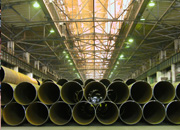 Threeway Steel is known as a professional supplier engaged in designing, manufacturing and distribution of a wide range of steel products with the headquarter located the central part of China – Hunan and six associated factories throughout China.
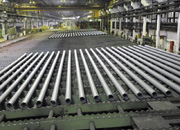 Threeway Steel is known as a professional supplier engaged in designing, manufacturing and distribution of a wide range of steel products with the headquarter located the central part of China – Hunan and six associated factories throughout China.
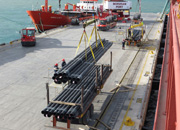 Threeway Steel is known as a professional supplier engaged in designing, manufacturing and distribution of a wide range of steel products with the headquarter located the central part of China – Hunan and six associated factories throughout China.