First, how to prevent corrosion of
spiral steel pipes used in water supply systems:
Usually, we use epoxy coal tar paint. For higher requirements, a 3-coat, 2-cloth application method can be used. This involves three layers of paint and two layers of fiberglass cloth, applied alternately. For general requirements, epoxy coal tar primer and topcoat can be applied directly, two coats of each. This is simple and convenient, and is the most common solution.
The interior of the steel pipe depends on whether the water is for drinking. If so, environmentally friendly paint, such as epoxy polyamide paint, should be used. 3PE anti-corrosion steel pipe base materials include seamless steel pipes, spiral steel pipes, and straight seam steel pipes. The three-layer polyethylene (3PE) anti-corrosion coating is widely used in the oil pipeline industry due to its excellent corrosion resistance, water vapor permeability resistance, and mechanical properties. 3PE anti-corrosion steel pipe features a three-layer polyethylene anti-corrosion layer. This layer combines the excellent properties of both fusion-bonded epoxy powder coating and extruded polyethylene anti-corrosion layers. It integrates the interfacial characteristics and chemical resistance of fusion-bonded epoxy powder coating with the mechanical protection properties of extruded polyethylene, significantly improving their respective performance. Therefore, it is an excellent outer protective layer for buried pipelines.
Second, Construction Precautions for Spiral Plastic-Coated Steel Pipes:
1. During transportation, loading, unloading, and on-site construction, spiral plastic-coated steel pipes must not be thrown or subjected to severe impacts.
2. Spiral-coated steel pipes should not be buried in reinforced concrete structures.
3. When installing spiral coated steel pipes, it is advisable to gradually connect from the largest diameter to the smallest diameter, and the pipe ends should be sealed promptly.
4. Welding is prohibited during the installation of spiral coated steel pipes.
5. When installing spiral coated steel pipes, if the pipe diameter is not greater than DN50, it can be cold-bent with a pipe-bending machine, but the bending radius should not be less than 8 times the pipe diameter, and the bending angle should not exceed 10°.
Furthermore, spiral coated steel pipes are not insulated pipes. Many people may see that spiral coated steel pipes are steel pipes coated with a thicker layer of plastic than ordinary spiral coated steel pipes and subconsciously assume that they have an insulation effect. This understanding is incorrect. While spiral coated steel pipes are indeed thicker than ordinary pipes, they do not have an insulation function. The main characteristics of spiral coated steel pipes are their anti-corrosion and environmental protection effects, which extend the service life of the pipeline and ensure the stability of the transported medium.
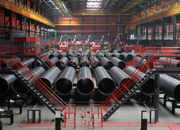 Threeway Steel is known as a professional supplier engaged in manufacturing and distributing a wide range of steel pipe, and our headquarter located the central part of China – Hunan and six associated factories throughout China.
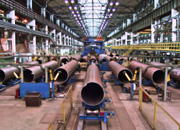 Threeway Steel is known as a professional supplier engaged in designing, manufacturing and distribution of a wide range of steel products with the headquarter located the central part of China – Hunan and six associated factories throughout China.
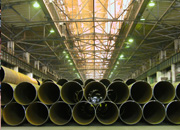 Threeway Steel is known as a professional supplier engaged in designing, manufacturing and distribution of a wide range of steel products with the headquarter located the central part of China – Hunan and six associated factories throughout China.
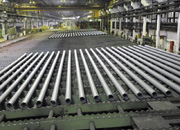 Threeway Steel is known as a professional supplier engaged in designing, manufacturing and distribution of a wide range of steel products with the headquarter located the central part of China – Hunan and six associated factories throughout China.
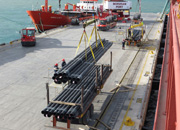 Threeway Steel is known as a professional supplier engaged in designing, manufacturing and distribution of a wide range of steel products with the headquarter located the central part of China – Hunan and six associated factories throughout China.