Introduction: Overview of 40Cr Steel
40Cr steel is a widely used medium-carbon alloy structural steel known for its exceptional balance of strength, toughness, and wear resistance. Under the Chinese GB system, the “40” indicates approximately 0.40% carbon content, while “Cr” represents the chromium alloy that significantly enhances hardenability and durability.
Its primary advantage lies in its excellent response to heat treatment. Through quenching and tempering, 40Cr achieves a robust combination of high surface hardness and internal core toughness, making it far superior to ordinary carbon steels in demanding environments. Consequently, it is the preferred material for manufacturing critical mechanical components like shafts, gears, bolts, connecting rods, and spindles that endure heavy loads and repeated stress.
Offering good machinability and cost-effectiveness, 40Cr steel serves as a practical, high-performance solution that bridges the gap between standard carbon steel and expensive high-alloy alternatives in the automotive and heavy machinery industries.
Chemical Composition and Basic Characteristics of 40Cr Steel
The performance of 40Cr steel is driven by its carefully balanced chemical composition. As a chromium-alloyed medium carbon steel, it combines specific elements to deliver exceptional strength, hardness, and toughness after heat treatment.
Main Chemical Elements
The core composition includes Carbon (0.37–0.44%), Chromium (0.80–1.10%), Manganese, and Silicon.
u Carbon provides the fundamental hardness and strength.
u Chromium is the key alloying element, significantly boosting hardenability, wear resistance, and oxidation stability.
u Manganese enhances toughness and strength, while Silicon improves elasticity.
u Harmful impurities like Phosphorus and Sulfur are strictly controlled at low levels to prevent brittleness.
Basic Metallurgical Characteristics
40Cr steel boasts excellent hardenability, allowing it to achieve a hardened structure deep within the material, not just on the surface. In its annealed state, it offers moderate hardness and good machinability, making it easy to cut and shape.
After quenching and tempering, its microstructure transforms into tempered martensite, providing an optimal balance of high surface hardness and a tough, resilient core. Compared to plain carbon steel, 40Cr responds more predictably to heat treatment, minimizing the risk of deformation or cracking.
Mechanical Properties of 40Cr Steel
40Cr steel is highly valued in engineering for its well-balanced mechanical performance. The following table outlines its core properties after heat treatment:
|
Mechanical Property
|
Key Characteristics
|
|
Strength & Hardness
|
High tensile strength and wear resistance, ideal for heavy-load components.
|
|
Toughness
|
Excellent impact absorption, preventing fractures under sudden shocks.
|
|
Fatigue Resistance
|
Withstands repeated cyclic stress, reducing long-term failure risks.
|
|
Hardenability
|
Achieves uniform internal hardness for consistent overall performance.
|
Physical and Processing Properties of 40Cr Steel
The table below outlines the core processing attributes of 40Cr steel:
|
Processing Property
|
Key Characteristics
|
|
Machinability
|
Excellent in the annealed state; difficult to machine after hardening.
|
|
Weldability
|
Limited; requires preheating to prevent cracking.
|
|
Heat Treatment
|
Highly responsive to quenching and tempering for custom strength.
|
|
Dimensional Stability
|
Moderate thermal stability; changes are controllable with proper processing.
|
Applications of 40Cr Steel in Industry
40Cr steel is a versatile engineering material widely used across various industrial sectors. Thanks to its excellent balance of strength, toughness, and wear resistance after heat treatment, it is the preferred choice for manufacturing critical components that endure heavy loads and repeated stress.
u Automotive Industry
In the automotive sector, 40Cr steel is essential for producing key drivetrain and transmission parts. Components such as crankshafts, connecting rods, axles, and gears rely on its high surface hardness and tough core to withstand continuous rotation, vibration, and impact forces, ensuring long service life and stable performance.
u Machinery and Equipment Manufacturing
For general machinery, 40Cr steel is commonly used to manufacture spindles, bolts, couplings, and hydraulic components. Its good machinability in the annealed state allows for precision shaping of complex parts, while its post-treatment strength resists fatigue and deformation under high stress.
u Heavy Equipment and Construction Machinery
Excavators, cranes, and mining machinery operate in harsh environments with extreme impact loads. The robust toughness and fatigue resistance of 40Cr steel make it ideal for the structural and load-bearing components in these heavy-duty machines, ensuring reliable operation under demanding conditions.
u Hydraulic and Power Transmission Systems
Hydraulic cylinders, piston rods, and transmission shafts frequently utilize 40Cr steel. Its superior strength and wear resistance help maintain dimensional stability and surface integrity, ensuring smooth operation even under high-pressure conditions over long periods.
u Tooling and Industrial Components
Beyond mechanical parts, 40Cr steel is also used for industrial molds, fixtures, and jigs. Its ability to achieve high hardness after heat treatment provides excellent resistance to wear and repeated mechanical contact.
Recommended 40Cr Steel Products & Global Shipping
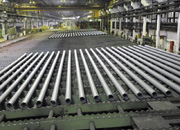
We supply a comprehensive range of high-quality 40Cr steel products designed for mechanical engineering and industrial manufacturing. Our inventory includes 40Cr round bars, forged shafts, heat-treated bars, and custom machined components. All materials are manufactured under strict quality control, ensuring stable chemical composition, excellent machinability, and reliable mechanical performance that complies with international standards (GB, ASTM, DIN).
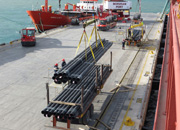
We provide efficient global shipping services, offering sea, land, and air freight options to meet diverse project timelines. To ensure product safety, all steel materials are securely packaged to prevent corrosion and damage during transit. We also provide full export documentation support, including inspection certificates and customs clearance assistance, ensuring a smooth and reliable supply chain for customers worldwide.
Conclusion: The Value of 40Cr Steel
40Cr steel stands as a cornerstone alloy structural steel in modern mechanical engineering, perfectly bridging the gap between standard carbon steels and expensive high-alloy materials. Its widespread popularity stems from a superior balance of strength, toughness, and wear resistance, driven by its medium carbon content and chromium alloying.
Through precise heat treatment like quenching and tempering, 40Cr steel achieves exceptional hardenability and structural integrity. This makes it the ideal material for critical high-stress components such as automotive shafts, gears, connecting rods, and heavy machinery parts. While it offers excellent machinability in its annealed state, proper processing and strict quality control are essential to unlock its full potential and manage its limited weldability.
FAQ:
(1) What is 40Cr steel used for?
Common industrial and mechanical applications
(2) Is 40Cr steel stronger than carbon steel?
Comparison of alloy steel vs carbon steel performance
(3) Can 40Cr steel be welded easily?
Welding limitations and required precautions
(4) What is the hardness of 40Cr steel after heat treatment?
Typical hardness range and influencing factors
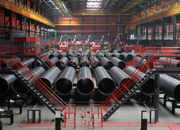 Threeway Steel is known as a professional supplier engaged in manufacturing and distributing a wide range of steel pipe, and our headquarter located the central part of China – Hunan and six associated factories throughout China.
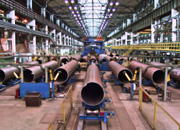 Threeway Steel is known as a professional supplier engaged in designing, manufacturing and distribution of a wide range of steel products with the headquarter located the central part of China – Hunan and six associated factories throughout China.
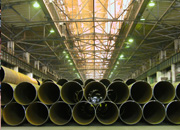 Threeway Steel is known as a professional supplier engaged in designing, manufacturing and distribution of a wide range of steel products with the headquarter located the central part of China – Hunan and six associated factories throughout China.
 Threeway Steel is known as a professional supplier engaged in designing, manufacturing and distribution of a wide range of steel products with the headquarter located the central part of China – Hunan and six associated factories throughout China.
 Threeway Steel is known as a professional supplier engaged in designing, manufacturing and distribution of a wide range of steel products with the headquarter located the central part of China – Hunan and six associated factories throughout China.